Life Updates - 2026

I’m still here! It’s been an incredibly rough year for me - we lost two beloved pets in 2025, racked up some big medical bills (among a few other unexpected big cost items on the house) that spilled over into 2026, and I’ve been swamped with a huge project for work (that the first phase of) is finally coming to a close here in September. I’ve already been struggling to find time to even play guitar, research & make videos, so add the extra stress and grief… it’s put a big damper on my hobbies.

Of course, I still have a list of things I’d still like to have but I think it’s time I narrowed the collection down a little bit and started to spend more time appreciating some of the unique things I already own. I sold off a big chunk of guitars and amplifiers earlier this year and haven’t really been buying much - just the Brunetti and the Ibanez RG752AHM for all of 2026, the first year I have ever sold more guitars/amps than I bought (crazy, I know) since 2016. I’ll likely have a few more sold by the end of the year too.

So yes, I’m slowing down for a little while here while I build back up some savings. Do not worry though, I’m still going to be picking up new stuff and writing about it. I still have a huge list of videos that I want to do, lots of circuits to cover, but admittedly I’ve had a tendency to hyper-fixate on criticism lately, which has killed my drive to work on the videos, at least while I’m still getting “back on my feet,” so to speak. I also planned to build a clone amp this year from scratch and start dabbling with mods and circuit tests - I think that’s going to have to wait until 2027 too.

I’ve also started another hobby collecting WW1-era militaria and firearms. I’ve always been fascinated by history and I consider that time period one of the most important in shaping the world as it is today, and I guess I never quite realized that I could hold/own many of the artifacts I used to stare at behind glass in museums. I certainly didn’t need another collecting-type hobby, but it’s been a lot of fun learning and I like it for the same reason I like collecting guitars - nothing quite like holding the real thing in your hands and thinking about the past.

In other news, my wife and I also reacted to our pet loss by fostering a whole litter of rescue cats, of which we kept two, and that’s been fairly time consuming as well. Our first cat, who is 16 years old this month, has also been experiencing some medical issues so that’s been the focus lately. Just for fun, here are pictures of all of the cats:
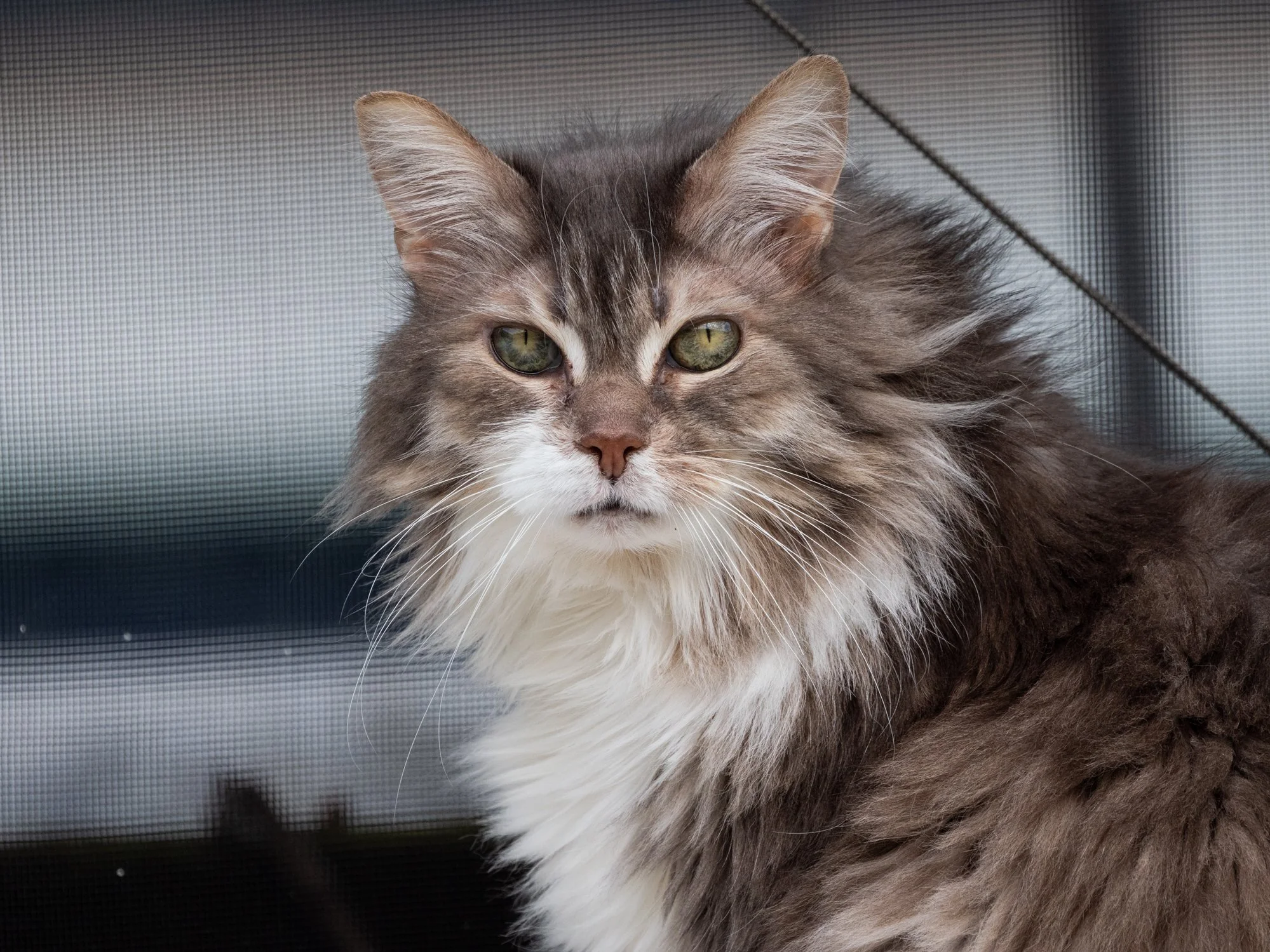
Kali - Queen of the house, will greet you at the door, loves pets and rock music, not scared of anything. She’s been with us since the old house and probably preferred being a single cat. She was born without a tail and looks like a tiny bear when she walks around, and will sit on her butt like a person.
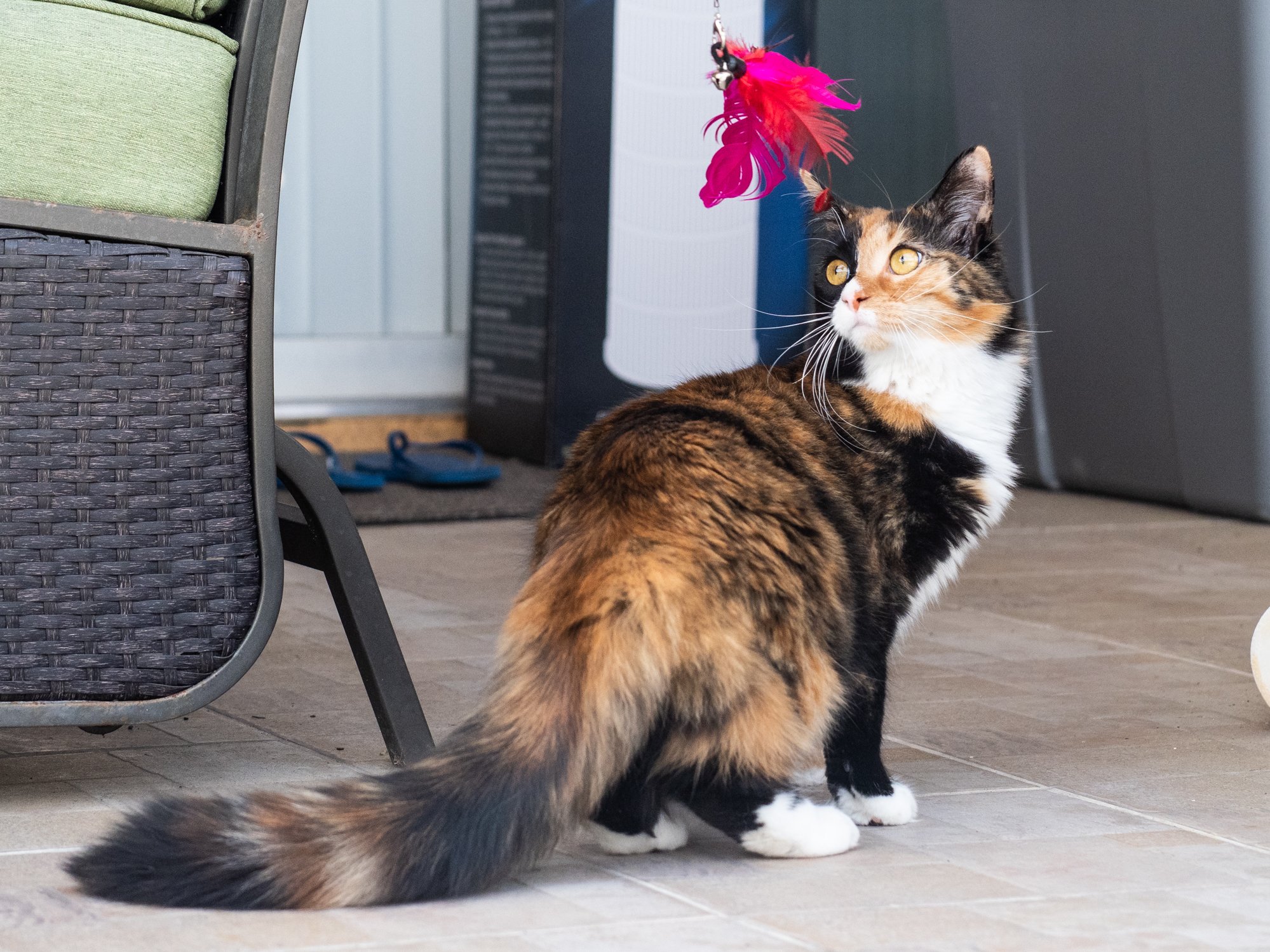
Kira - Bonded with Benji, loved to play with reflections, climb our legs, and had a very memorable bark-like meow. Passed away very young (1.5y) in Dec 2025.
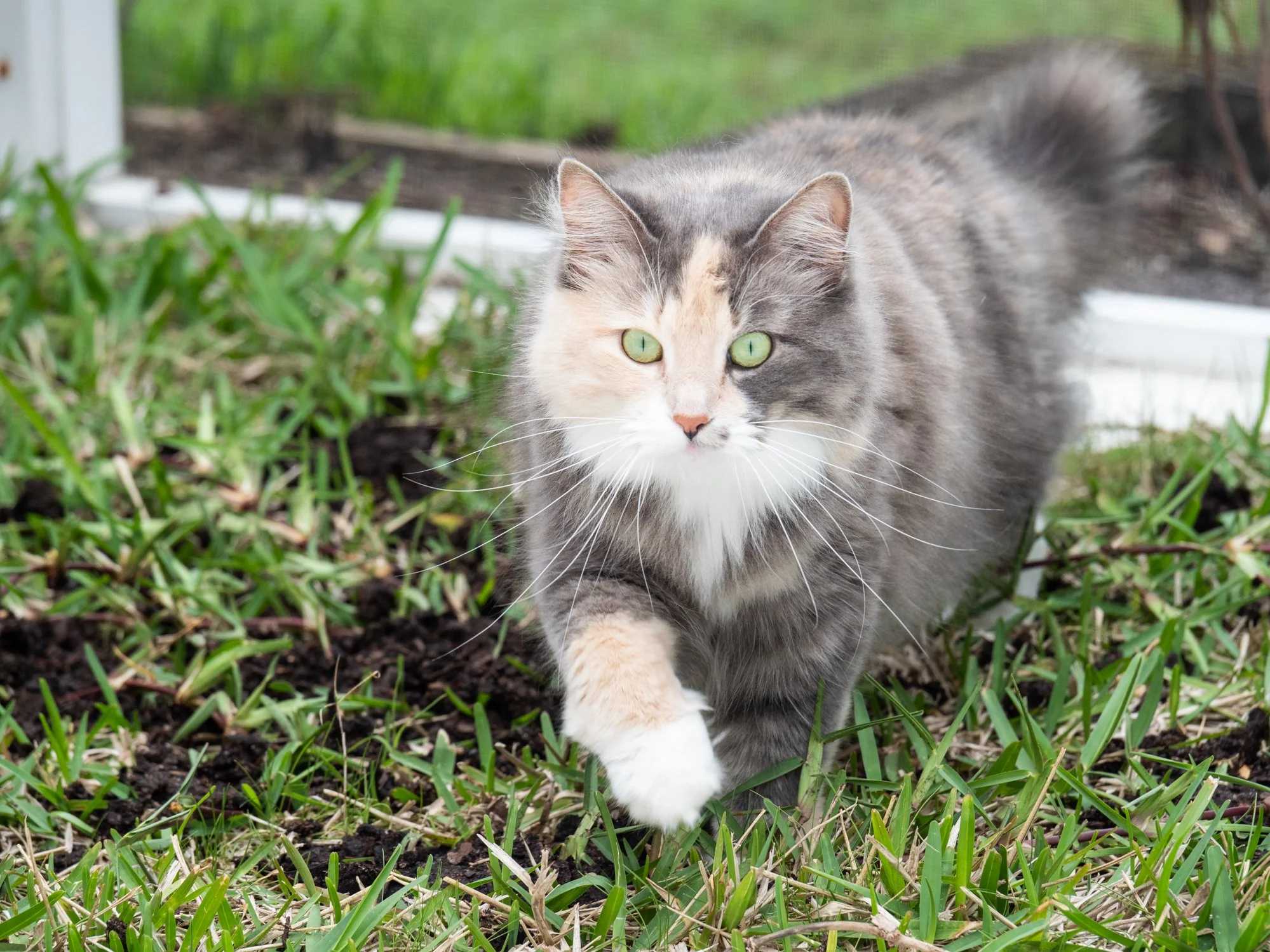
Caoimhe - Not afraid but doesn’t like to be touched, except in her hiding spots when she’s in the right mood. Loves to play after watching the other cats play, but only by herself. Does not care about treats.
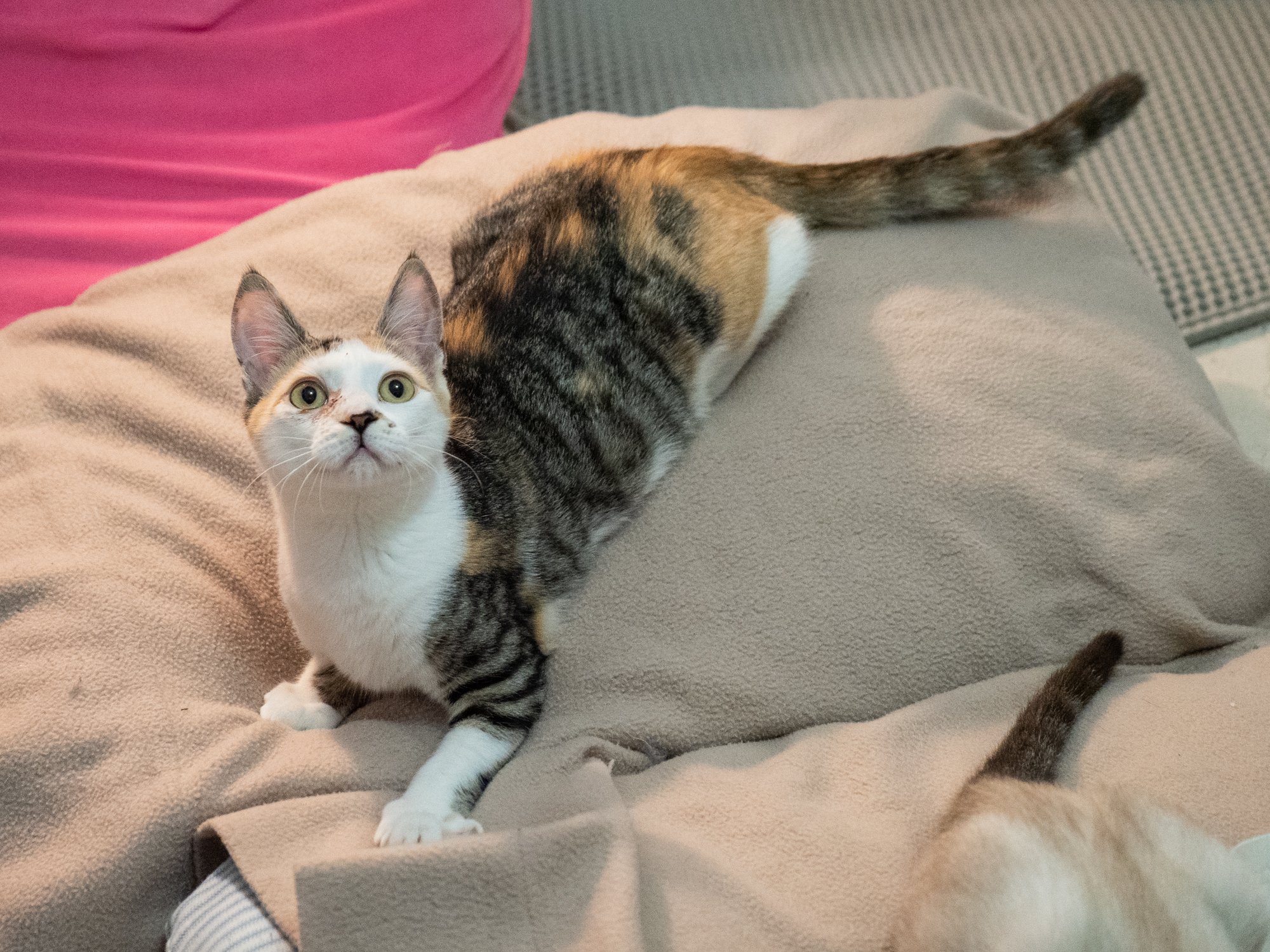
Eloise - Part of the foster, was a bit shy but loves to play, prefers to snuggle with the lights off. Softest fur I’ve ever felt. Found her a nice home where she lives with Finn
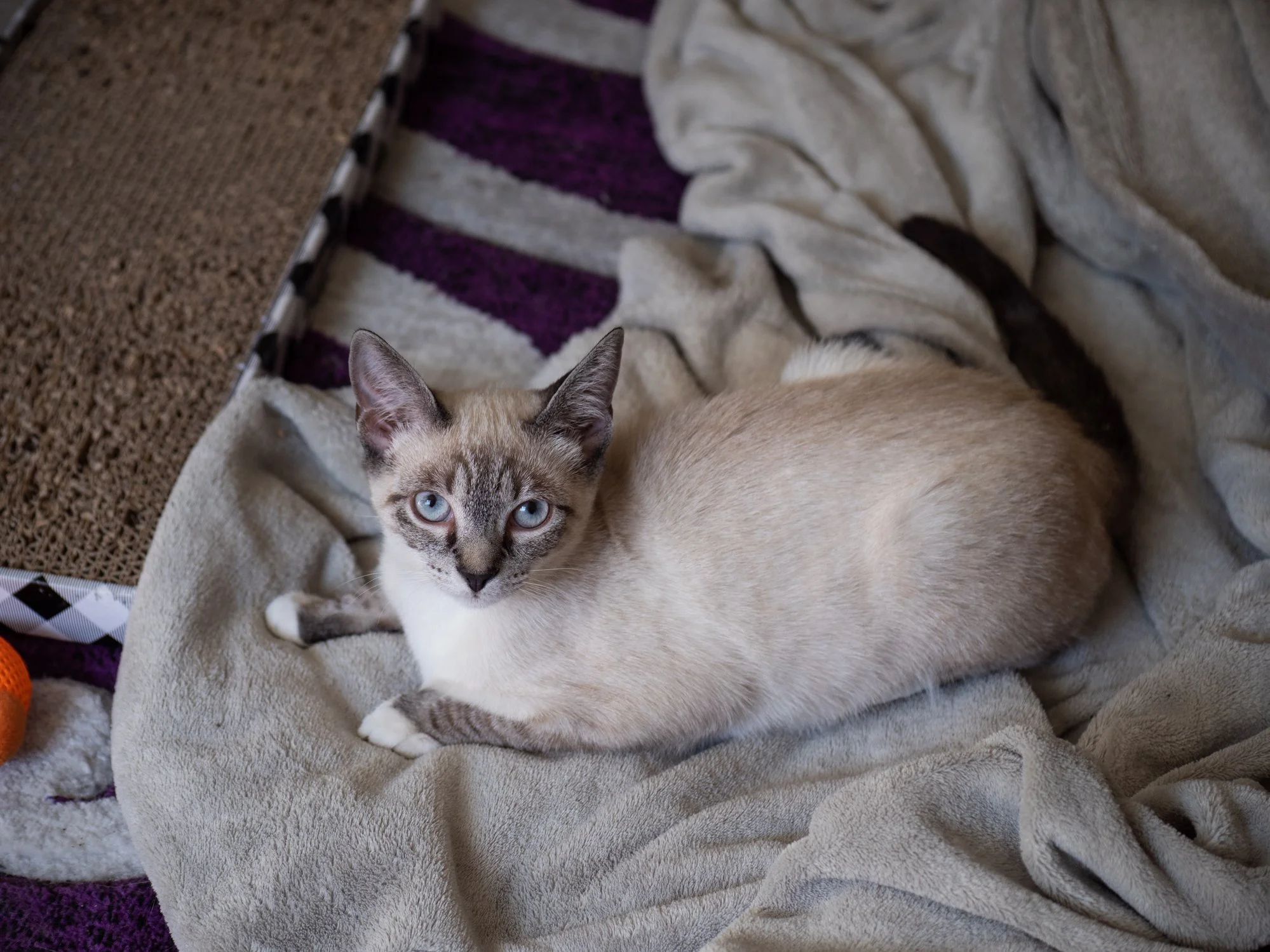
Charlotte - Part of the foster, we kept her too, despite being extra tiny she dominates play time to the point where she will be exhausted and panting before anyone else gets a turn. Hisses at her toys when she gets too tired to chase them. Main character energy all around. Loudest purr-er and quite adamant that I join her for an afternoon nap and loves Benji. My wife thinks she looks like a rat, which is becoming more and more true as her fur gets darker in color.
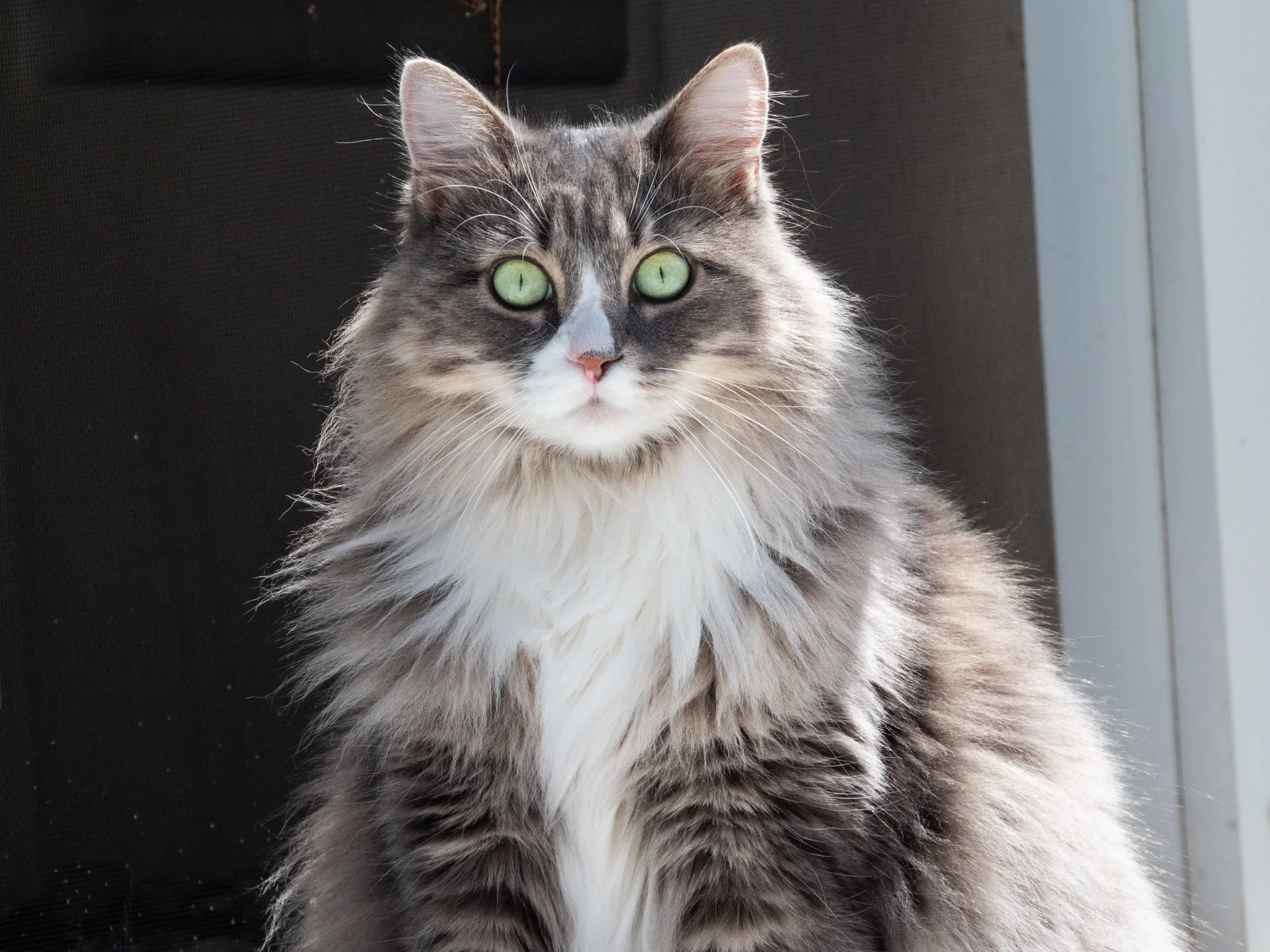
Sophia - Our second cat, scared of everything being introduced to people very late, had a litter of kittens. We spent a lot of time earning her trust and she loved to be pet in the morning while she ate breakfast. Passed away very young (2.5y) Feb 2025.
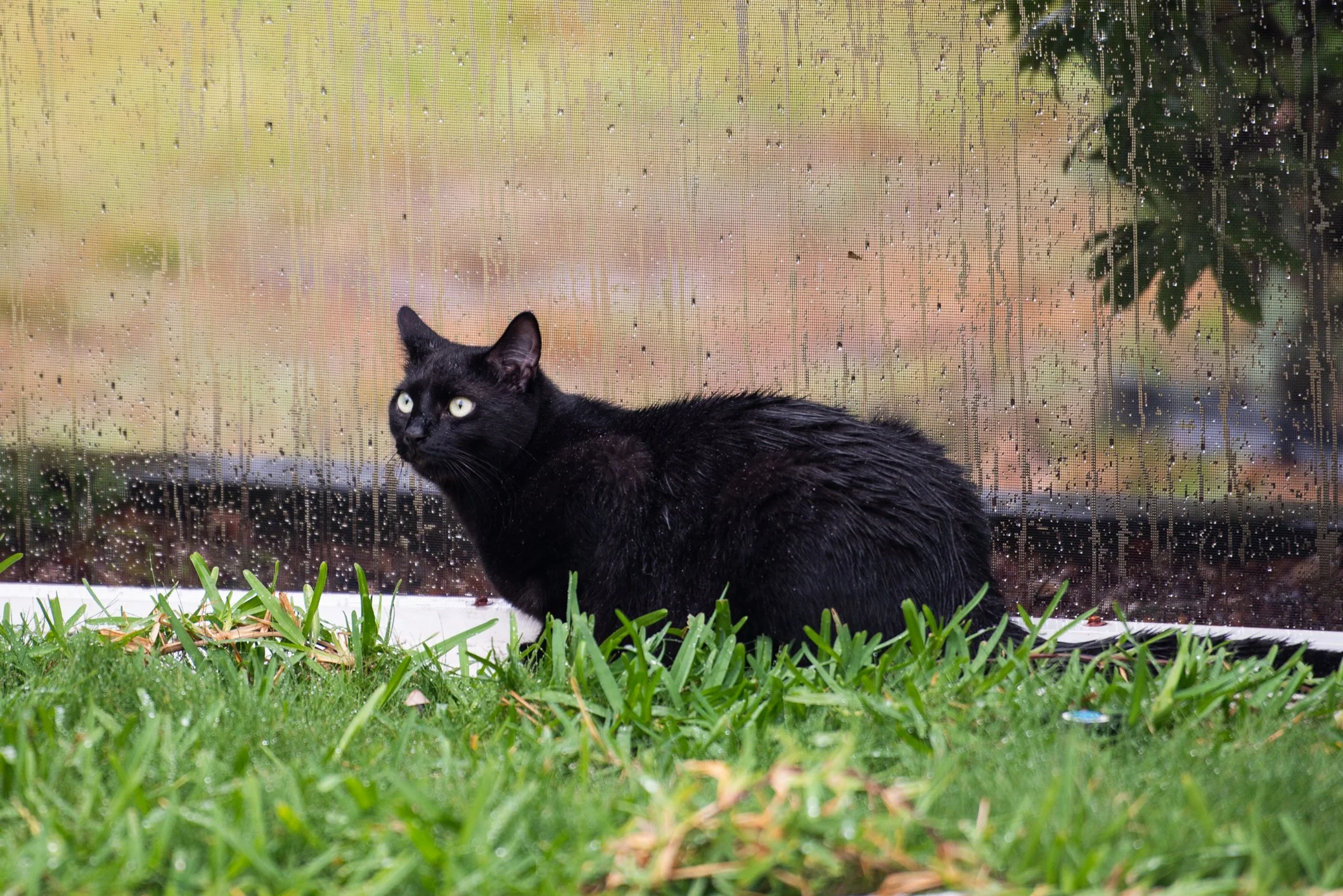
Benji - Bonded with Kira, loves the rain, is gigantic & muscular but very gentle, Sophia taught him to hide from the doorbell. Loves other cats and despite his size is great at making new cats comfortable.
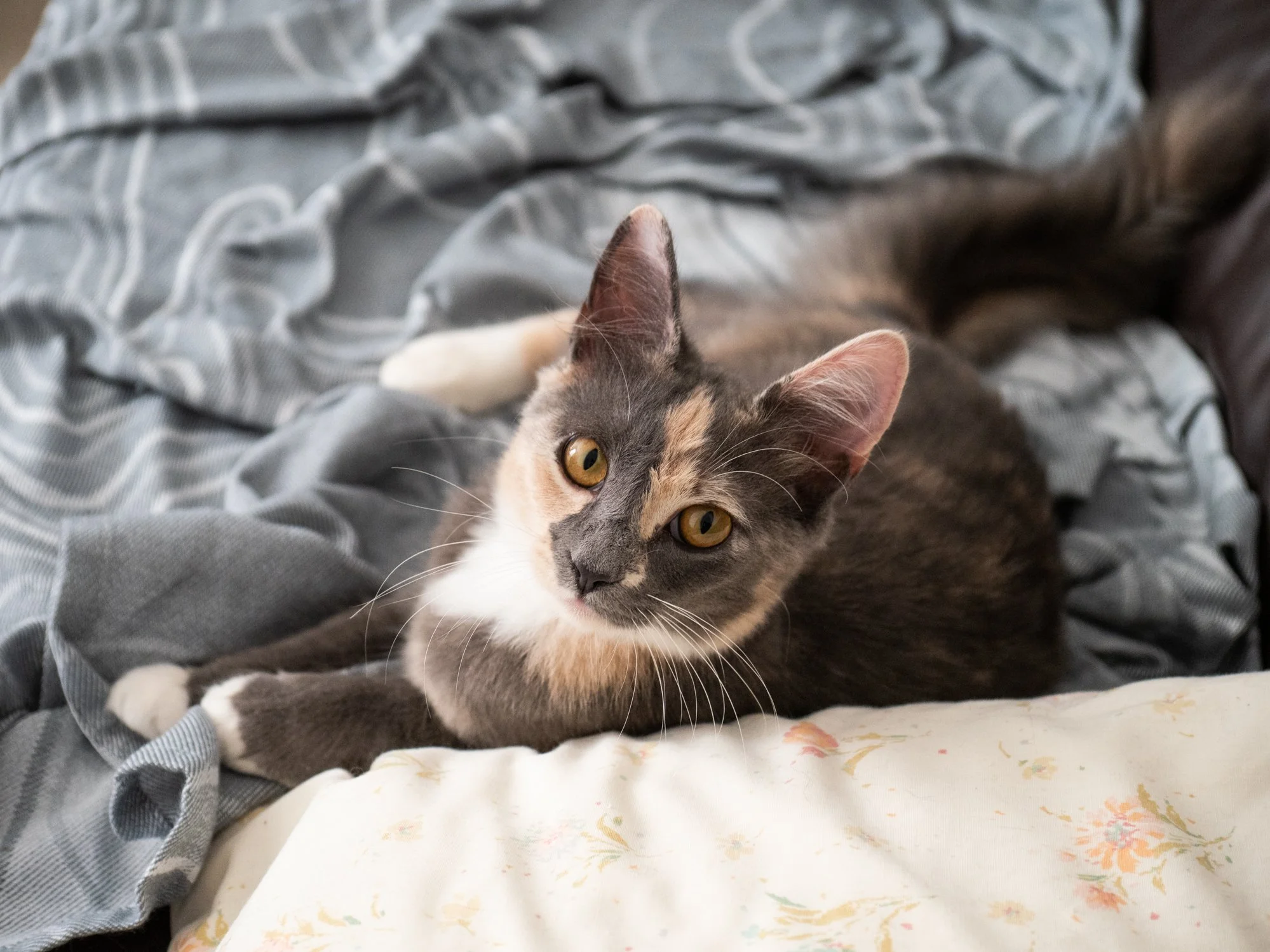
Olivia - Part of the foster but we kept her, spends a lot of time in my lap, wants to eat a lizard someday. Might be distantly related to Caoimhe as they came from the same colony.
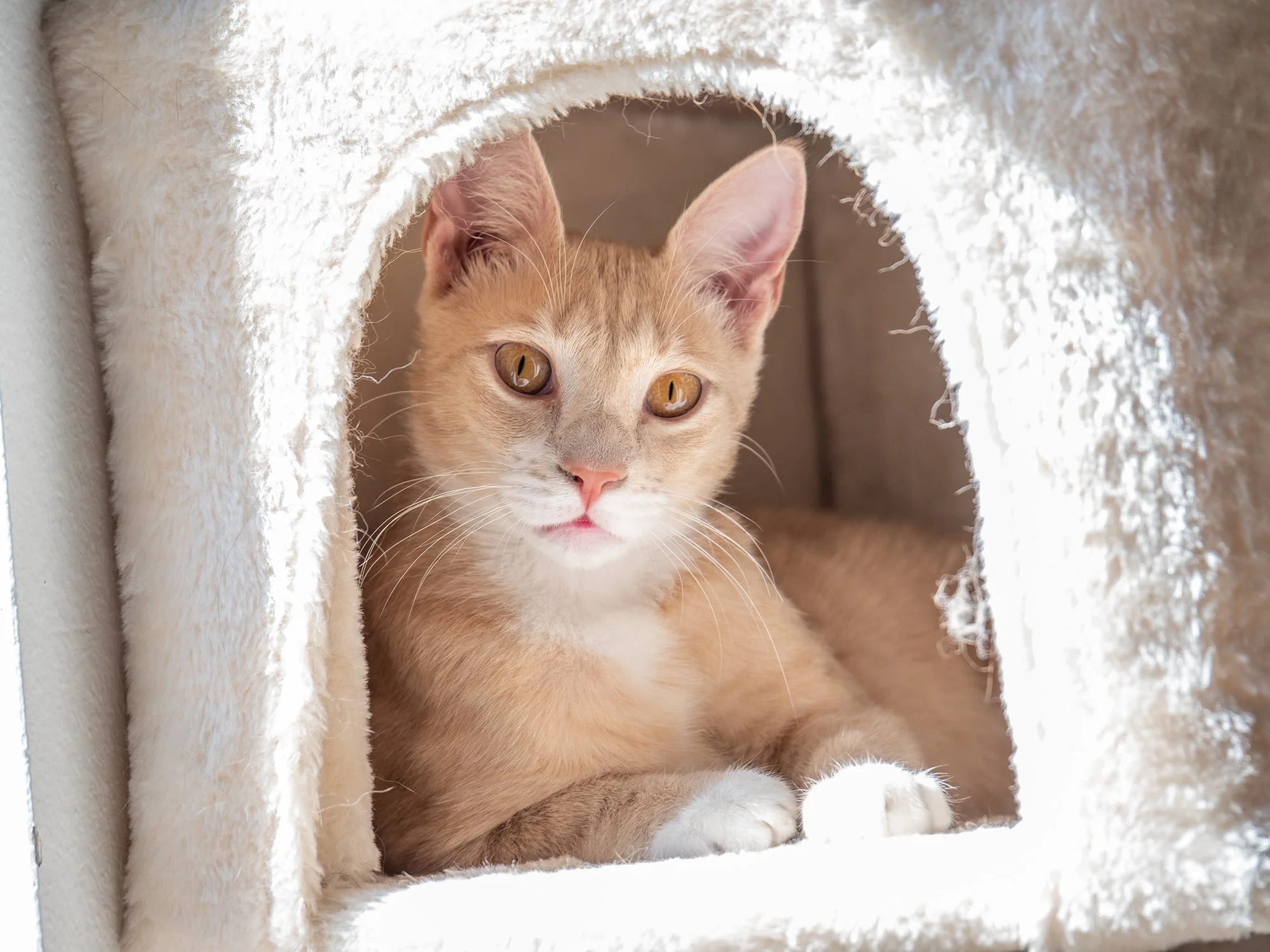
Finnegan - Part of the foster, lives in a new home now with Eloise. Growls at his toys especially if you try to take them away, loved to be in a big cuddle puddle with Olivia and Eloise.
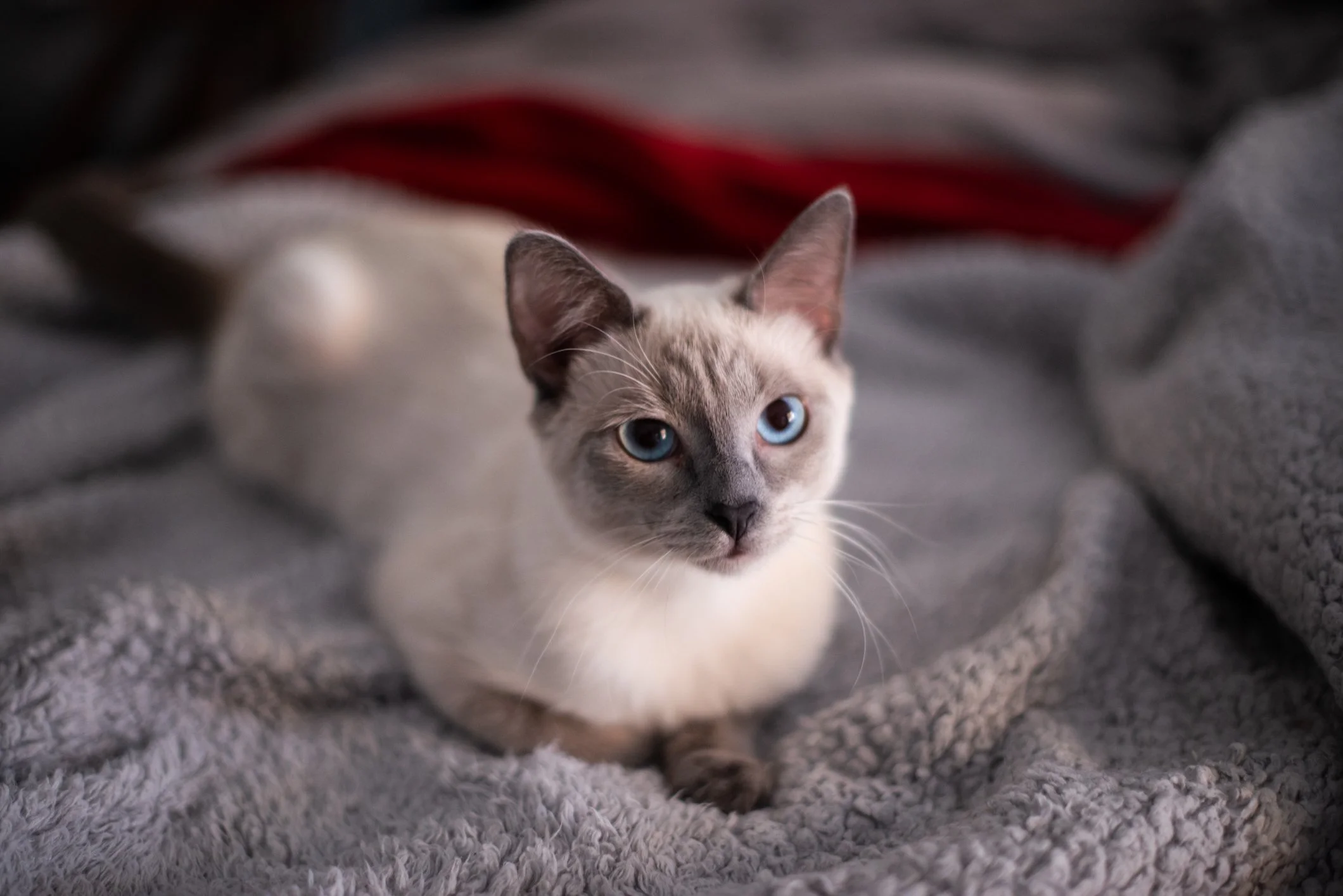
Genevieve - Initially took her as a short-term foster, but she loves to snuggle my wife so we kept her too. Loves to wrestle with Charlotte and Benji, but for some reason is terrified of Olivia. Rolls around constantly like a ferret and has no qualms about stepping on your neck while you sleep.

Thanks for reading.
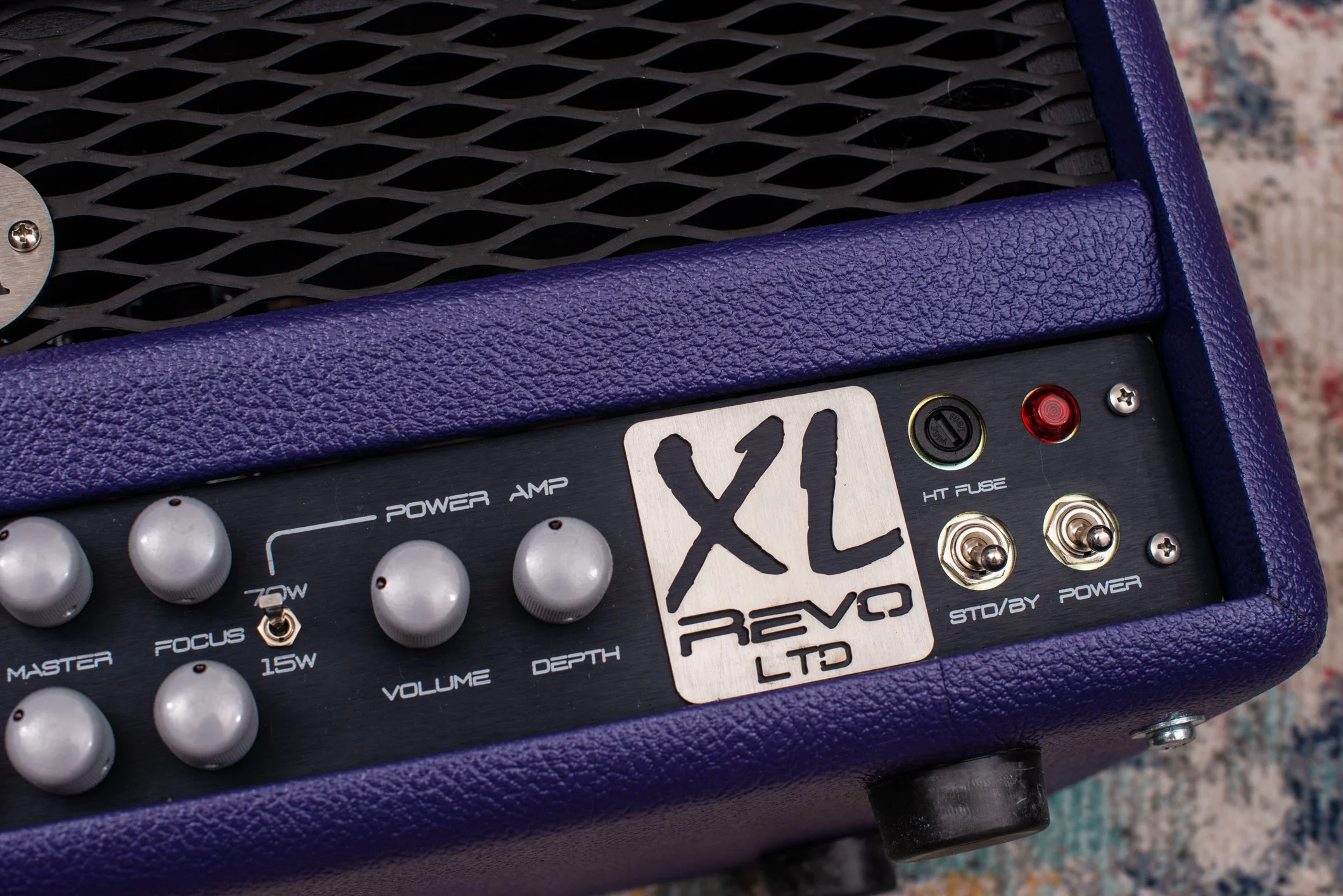
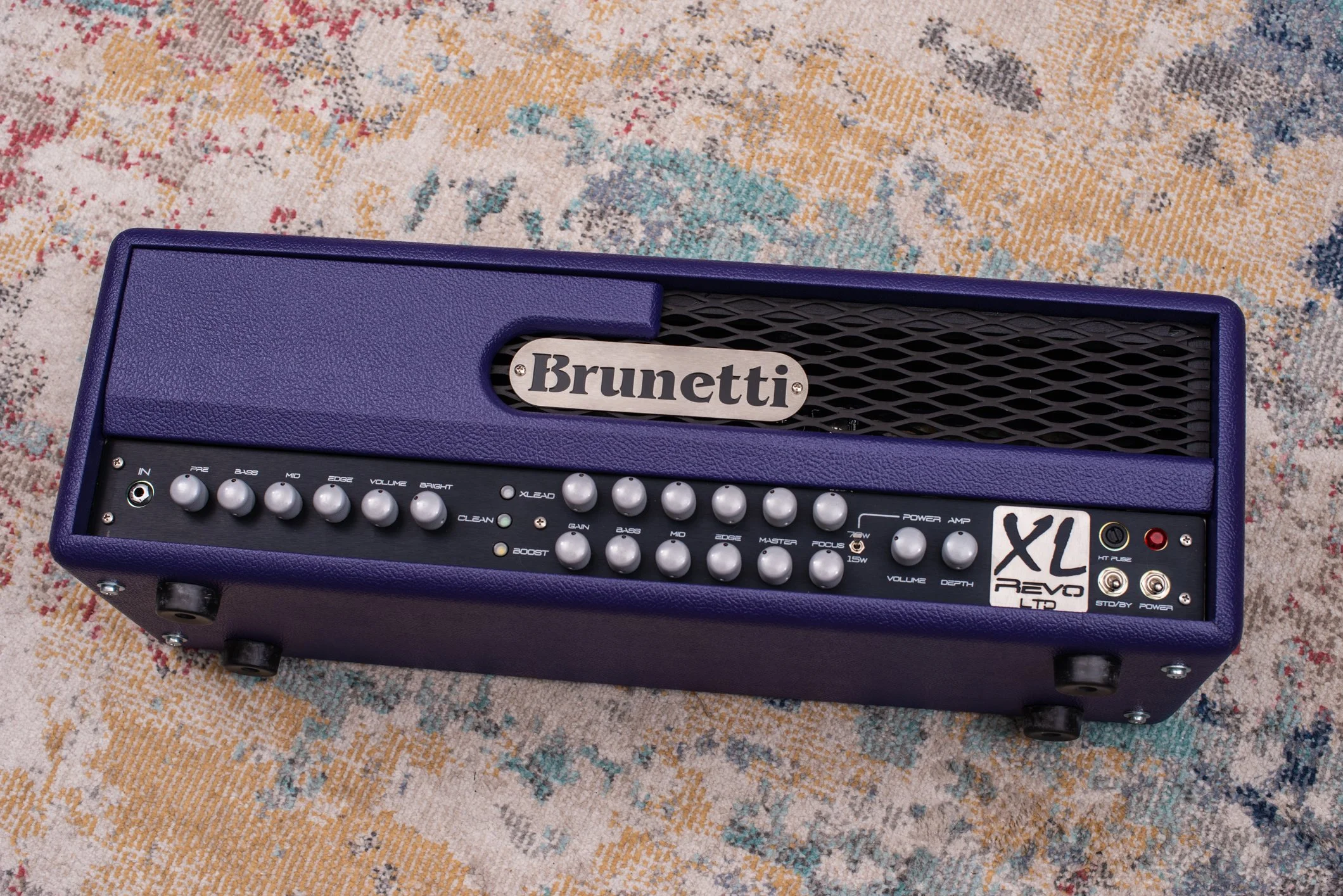
New Amp: 2009 Brunetti XL REVO II Limited Edition Purple

I’ve been slowly becoming more and more interested in the various Brunetti line of amps. These are a little less known here in the US, and I’m not sure how popular they are in Europe either - I was actually in Italy this summer and stopped by a couple of music stores and never saw any Brunetti products (or amp heads in general, actually).

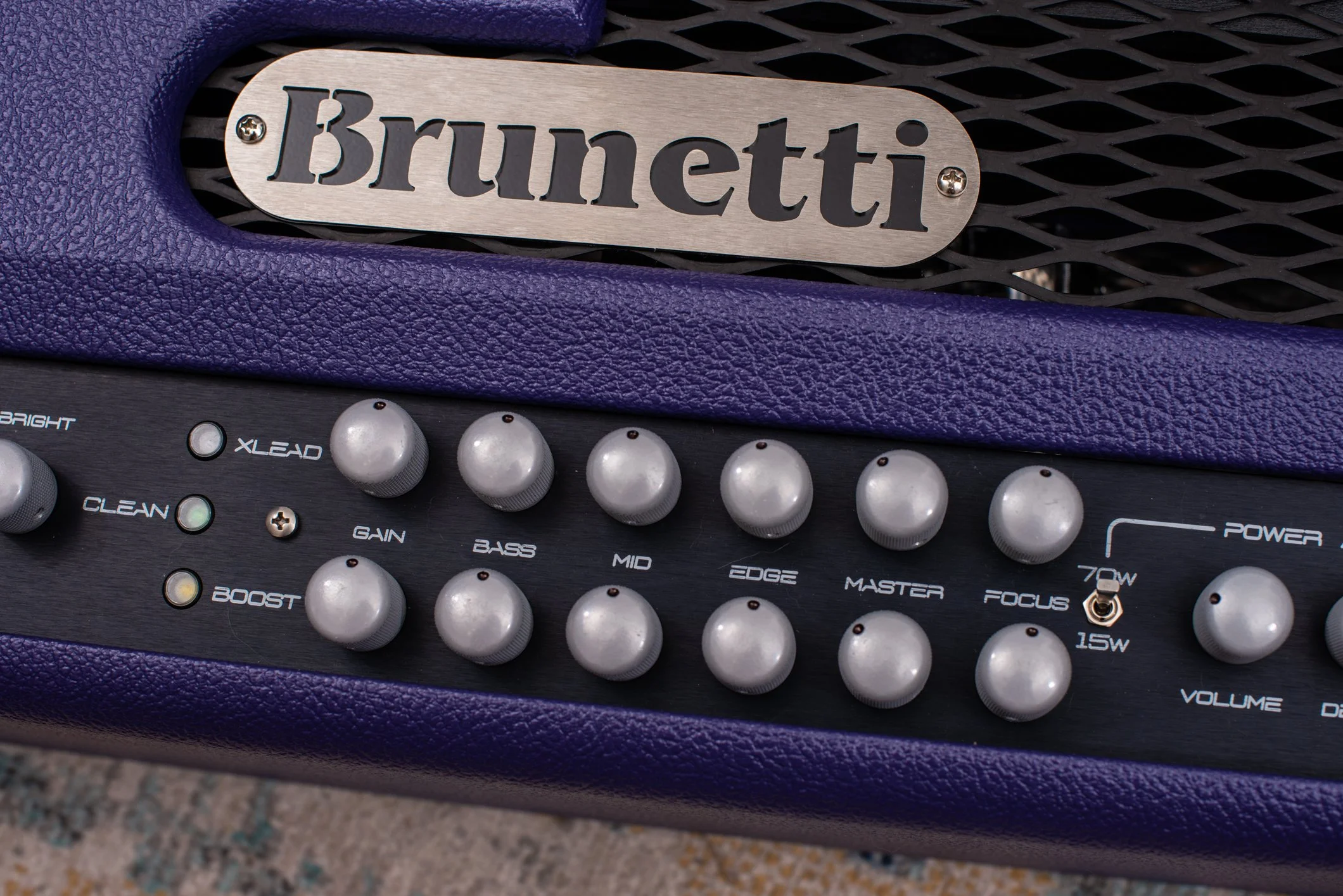
This amp is nearly identical to my XL Revo II, but comes in a very cool purple headshell that lacks the 1U rack space that the standard model includes. The most obvious difference at first glance is the pair of 6550/KT88 power tubes, bringing this amp to roughly 70 watts. That’s a little louder in theory compared to my 50w XL Revo, but this amp also gains a 15w mode on the front panel. Otherwise, the controls front and back are identical - as are the features, and likely the circuit itself (besides accommodating the different power tubes).

It’s a 3-channel amp, with a very nice clean channel with a bright control (rather than a switch, making it very versatile). The “Boost” channel does a great 800-style crunch but can get a little bit gainier and bassier than a 2203 circuit. The real kick comes from the XLEAD channel, which gets nice and saturated. The voicing of the XLEAD channel is a bit different from Boost as well, adding a bit more bass and treble with the additional gain. That gives the impression of it being “scooped” but it really isn’t, and can be dialed very similarly to the boost channel if desired. It’s smooth and mean sounding, and stands out very nicely in the mix to my ear - great sounding amp all around. If I had to pick a comparison, it feels more Soldano-like to me than something like a Fireball, which has a similar amount of gain but voiced differently.

Awesome amp to add to the collection here, and these really deserve more attention. I’m not as familiar with the current product lineup (Pleximan, Mercury) but there is a Mille! preamp available brand new right now. The Mille was Brunetti’s original preamp design and is essentially the preamp circuit from the original XL. While I haven’t played one myself, I’d hazard a guess that it probably sounds incredible paired with a good power amp, and for $1k new I think it’s a huge value.

Of course, I’m still looking for an original XL myself, and go ahead and add the tube-mix Pirata 141 (which allows for a mixing between two sets of power tubes) to the wanted list as well. I’d love to hear a different take on this than the Egnater Renegade, which I just couldn’t get along with. I love the power tube switch on my Kasha Rockmod but that’s not a mix, it simply switches from one pair to another pair.

More pictures here

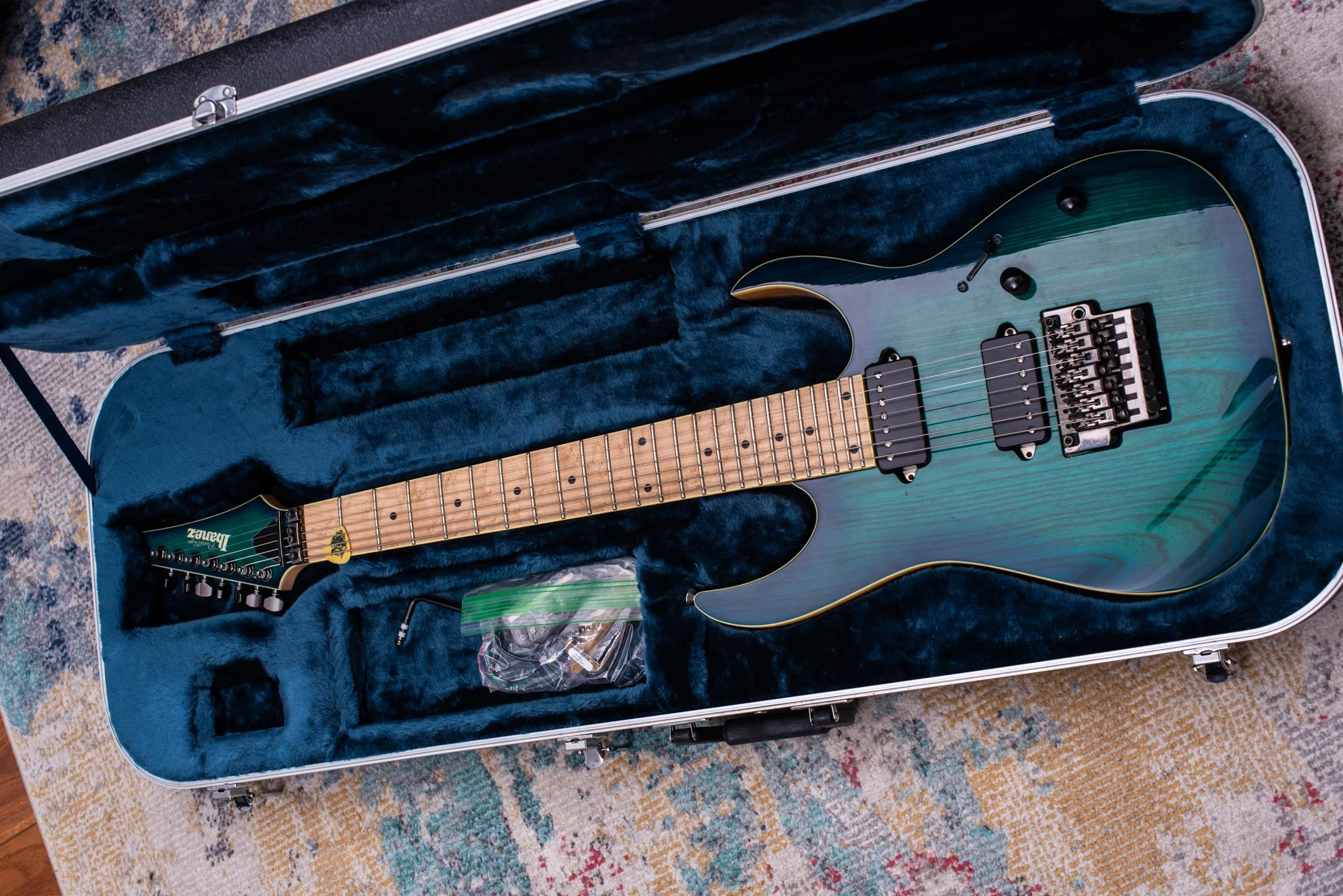
New Guitar: 2017 Ibanez RG752AHM Nebula Green Burst

I’ve really been enjoying my Ibanez RG752LWFX with the fixed bridge, but I really wanted to get my hands on one with an Edge. I’m a big fan of maple fretboards and binding - a pretty rare combination - so I settled on looking for this now discontinued model.

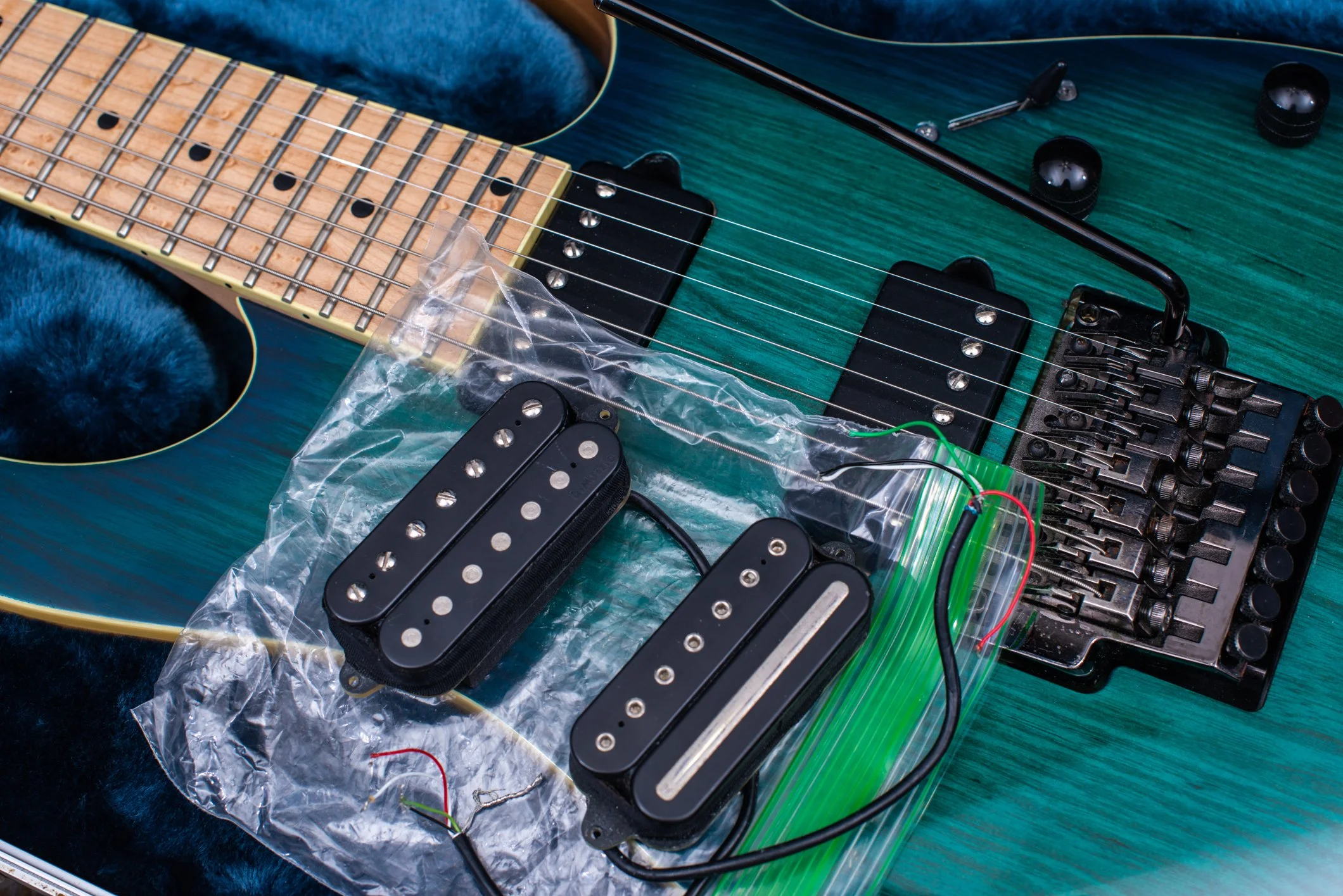
While I would’ve preferred the “Royal Plum Burst” color, I couldn’t pass this up for the price when it showed up on Reverb. It was priced aggressively already, and also had a set of BKP Nailbombs installed, plus the original pickups included! The neck has great birds-eye patterning on the fretboard face, and the rear has very noticeable flame to it, and the rear of the body is natural (clear) finish showing off the wood grain, which is a unique look.

I’ve never had BKP Nailbombs before, but I have had the BKP Rebel Yell in one of my Kramers and found that to be a superb pickup. These are supposed to be more aggressive metal-oriented pickups, which is exactly what I’m trying to get out of a 7-string guitar like this. They are high output but extremely clear, with defined treble without being overly bright, perfect for what I wanted.

One other unexpected bonus, technically it did not include the original pickups. The original neck pickup is there - a Dimarzio PAF7 - but also came with a Dimarzio Crunch Lab 7, which is the same pickup I chose to put in the bridge position of my other Ibanez RG752LWFX. I found the Crunch Lab to be a big upgrade over the PAF7 for my setup, so it’s nice to know that if I decide I don’t like the BKP Nailbombs (unlikely) I have a really strong backup option. Alternatively, I could sell the Nailbombs and put the Dimarzios in and come out even more in the green on this purchase.

I actually purchased this guitar all the way back in January and I’m only just getting around to taking pictures and putting it on the site - to say it’s been a busy year is an understatement. Overall I’m very pleased with this one.

More pictures here

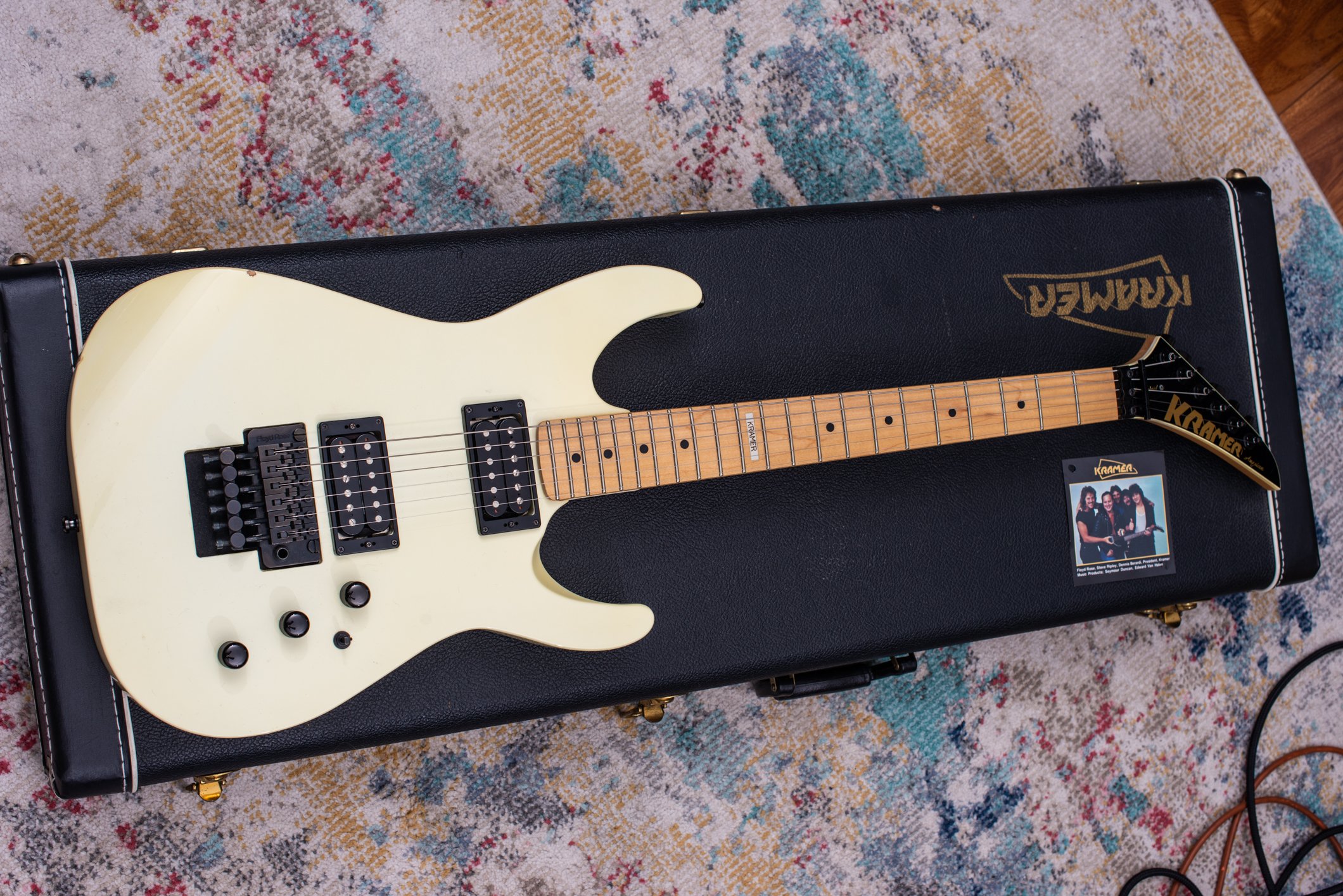
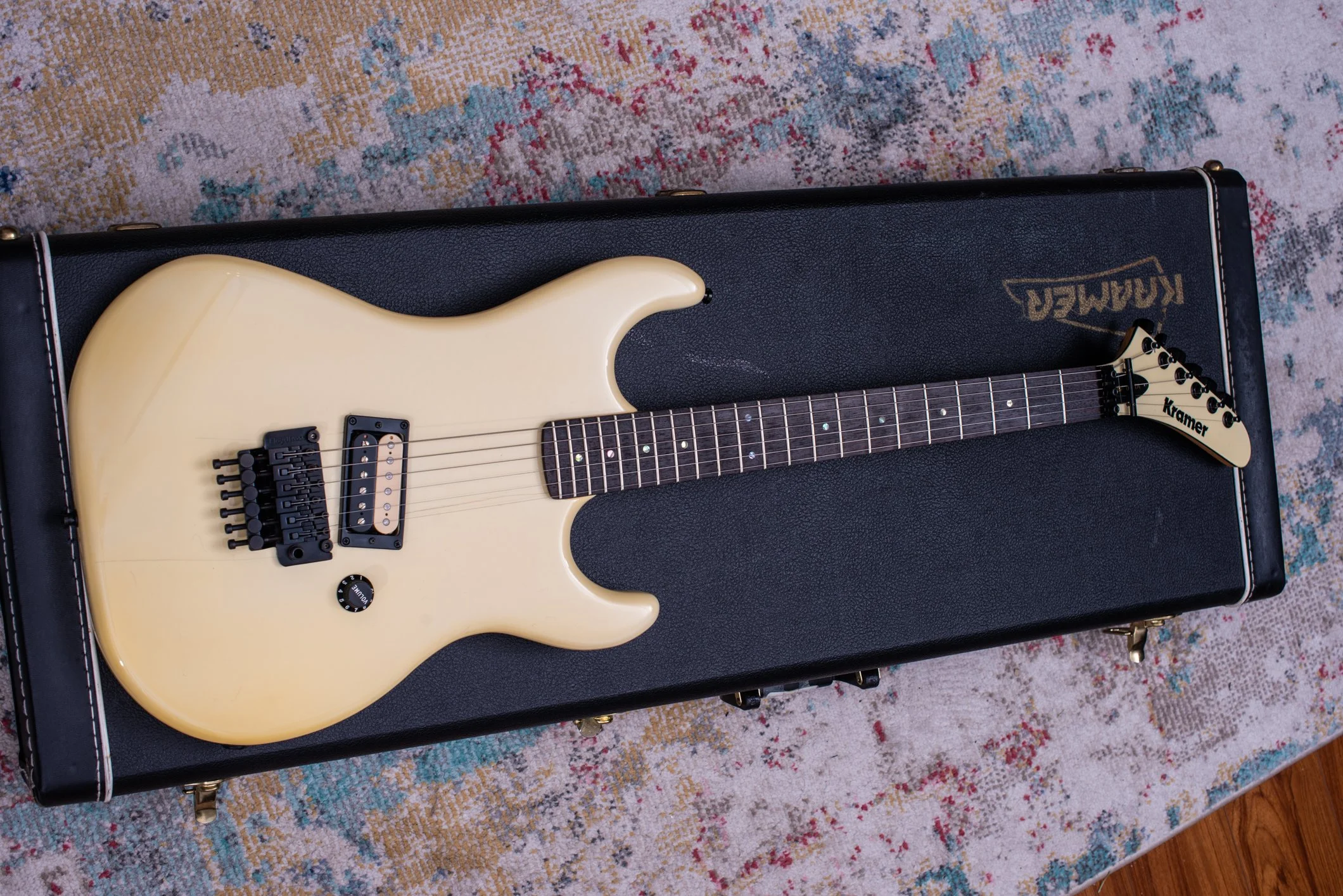
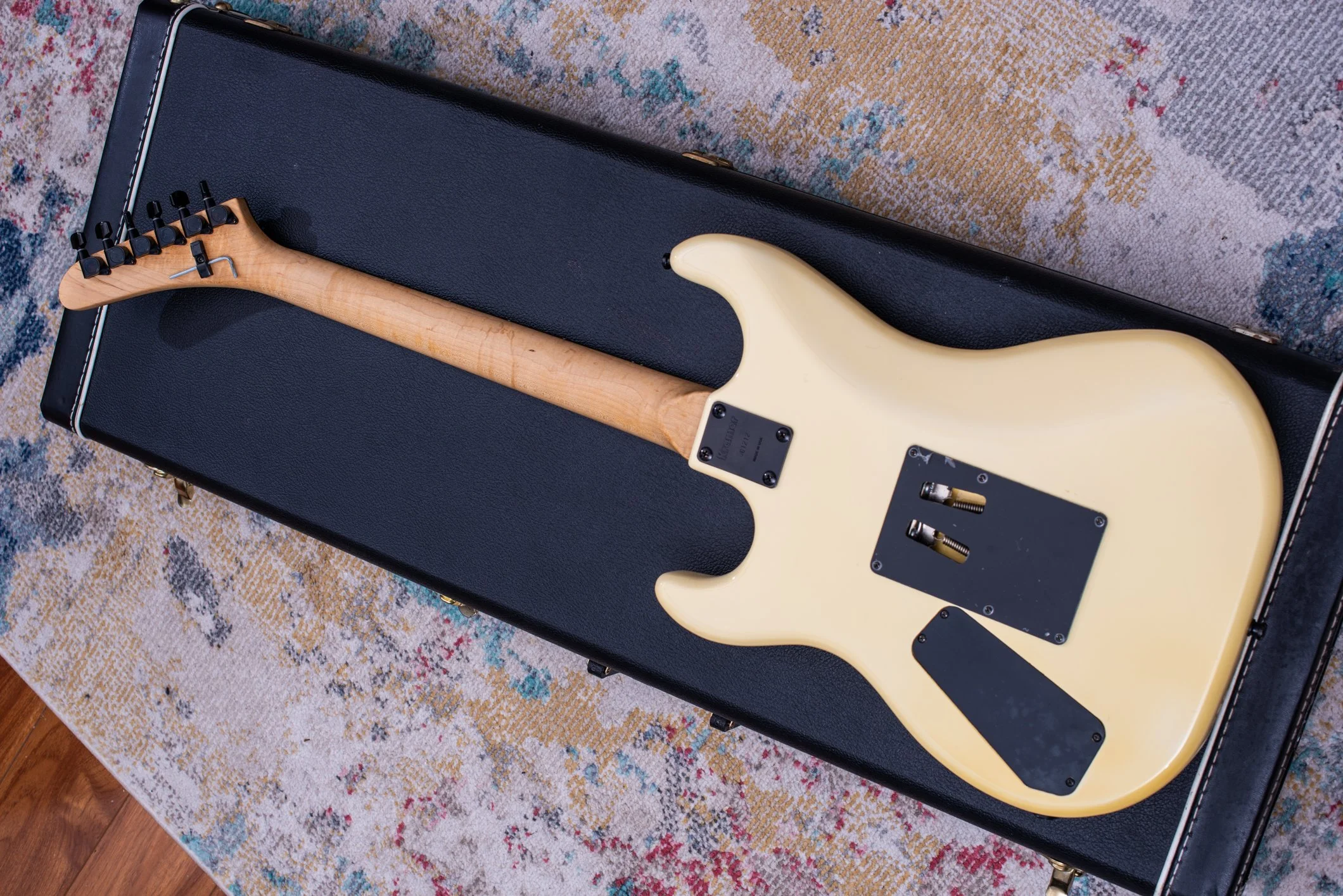
New Guitar: 1988 Kramer Pacer Imperial

This will probably be my last snag of 2025, which in a strange change of pace for me is the first year where I sold more guitars than I bought (!). I still have far too many and plan to let more go in 2026, depending on market conditions of course.

I’m a big fan of these 12th fret inlay Kramer necks, so when this popped up on Reverb I threw out a fair offer and I was thrilled that it was accepted.

It’s in really great condition, with the most important part (the neck) in nearly spotless, mint condition with no fret wear at all. It has a smooth, light gloss on the back and a relatively flat fretboard by Kramer standards.

The body also looks great, with one small chip by the forearm at the edge of the body being the only obvious sign of use - I bet whoever owned this was upset when they bumped into a table or whatever caused that, since it is otherwise so well taken care of.

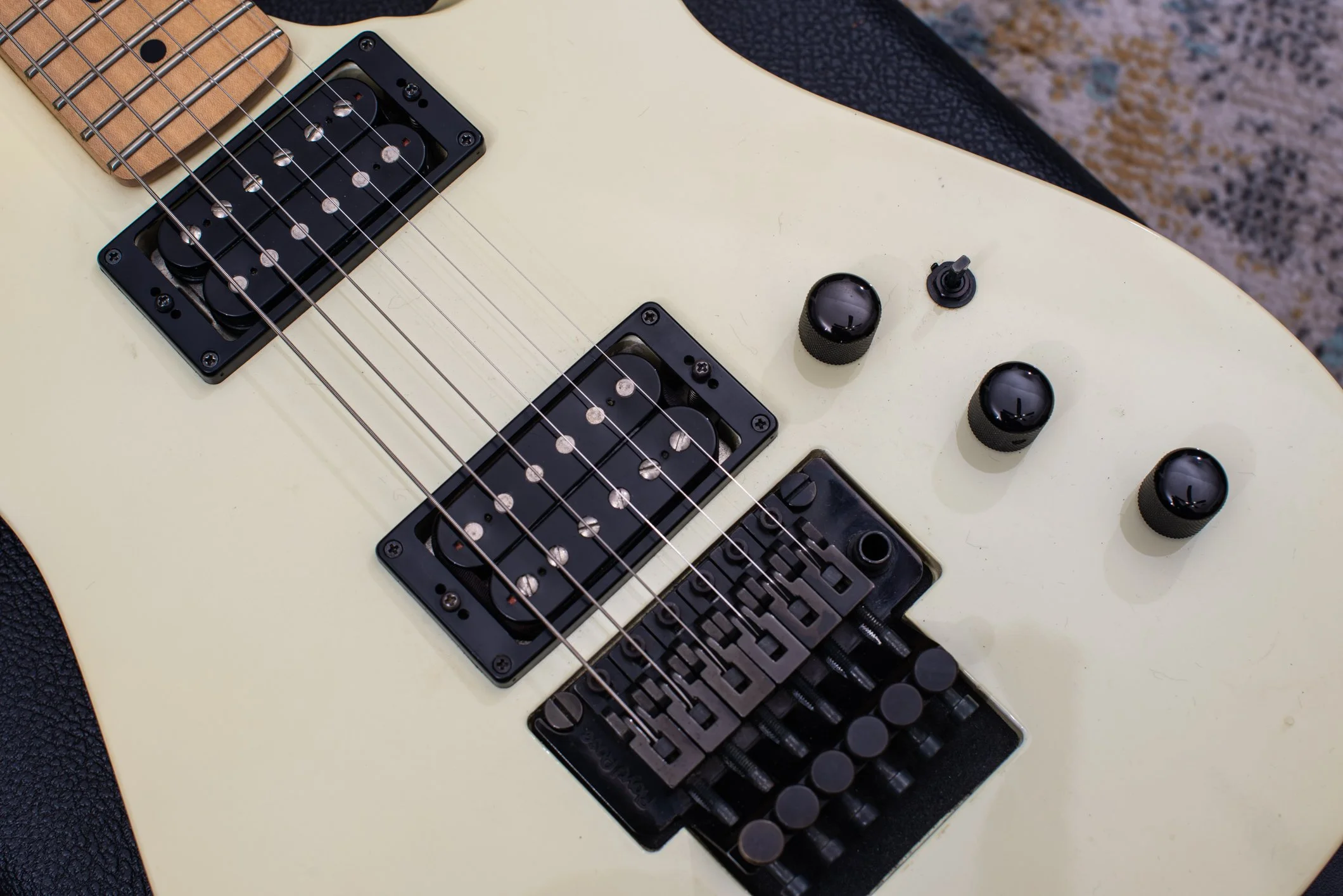
Pickups are the standard JB and Jazz combo, and since this is a true Imperial 7/8 body there are no extra holes drilled like the more common Sustainer bodies from this era (which often become “imperialized” when their Sustainer electronics fail). Another sign of the great condition is the Floyd, which hardly has a smudge or any sign of palm sweat on the saddles, which is quite a surprise. Saddles are straight across so I wonder if the intonation was ever set on this, or if the previous owner just set them straight before selling it.

Great guitar to end the year on. See you all next year!

More pictures here

New Guitars x2: 1995 Kramer Vaccaro Pacer and 2006 Baretta 85 USA RI

As a bit of a Kramer fanatic, I’m always absorbing information about the brand and its turbulent history. As many know, Kramer as we knew it went out of business in 1990 which culminated in an infamous “fire sale” at the factory in Neptune, NJ, where many parts were sold off to pay creditors. The next point that people seem to commonly know is that Gibson bought the brand name and revived it, initially with the online purchase, factory direct “Musicyo” website (a novel idea in 1999 when most guitars were still bought in person), but now with new models in a more traditional distribution style akin to their Epiphone budget brands.

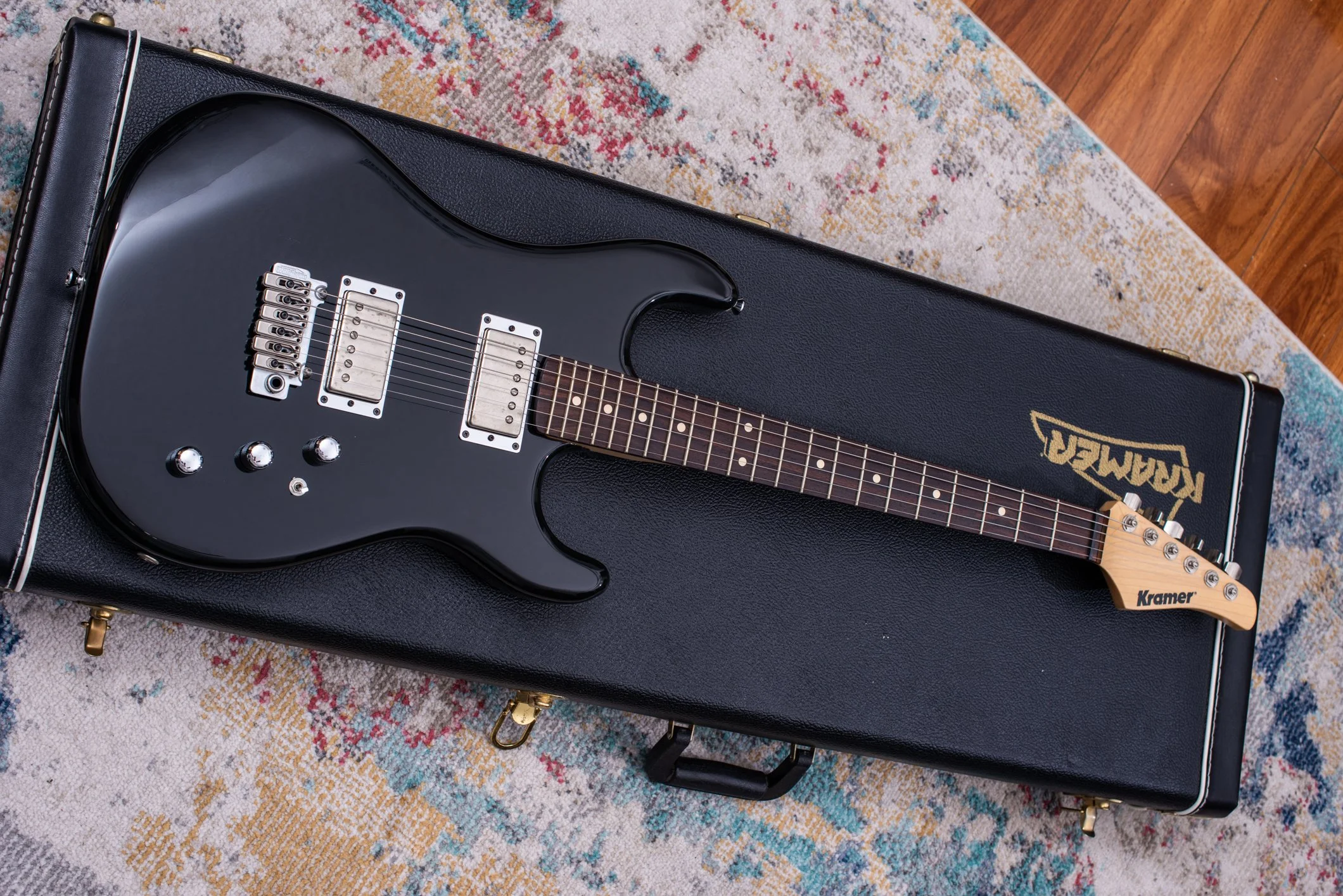
However, there were other attempts to revive the brand during the 90s, and one of those actually produced a handful of very nice, high end, USA made guitars. In 1995, 5 years after the original Kramer company shut its doors, Henry Vaccaro and his team started on producing a new line of guitars under the name “Kramer Music Industries” or KMI. This resulted in a lineup of both wood neck and aluminum neck guitars, sometimes reusing old bodies and necks from the 70s and 80s, but with unique new designs. Still, the designs were in a more classic spirit, as the pointy headstock glam guitar thing was dead and buried by 1995. Check out the catalog scans here on the Vintage Kramer website.

I don’t know how many of these guitars were actually built, but there are quite a few cool designs and they are exceedingly difficult to locate, but I finally got my hands on one. It’s a more basic model, simply called the “Pacer,” which looks and feels just like an early 80s beak headstock Pacer Imperial.

This is definitely the “safer” model in the lineup, and there are only a few noticeable differences compared to a Pacer from 12-13 years prior. The Wilkinson VS-100 tremolo jumps out at me first - no Rockinger or Floyds on any Vaccaro era Kramers. This is a great bridge, and some of my all time favorite Kramers are the early beaks with the traditional strat trems, and this is very similar to that.

Pickups are Seymour Duncans, a JB in the bridge and a Jazz in the neck, with factory chrome covers which look great. The neck is a bit more modern feeling, with a soft feeling satin finish. This contrasts with 80s Kramers which had either a very glossy lacquer or a very not glossy oil finish - it’s in between those in feel which is a really nice compromise. The headstock logo is in a slightly different place and font and sports locking Sperzel tuners. This neck is definitely not a reused Kramer piece, the nut area and wood grain is not consistent with any of the usual beak necks (most of which were made by ESP anyway).

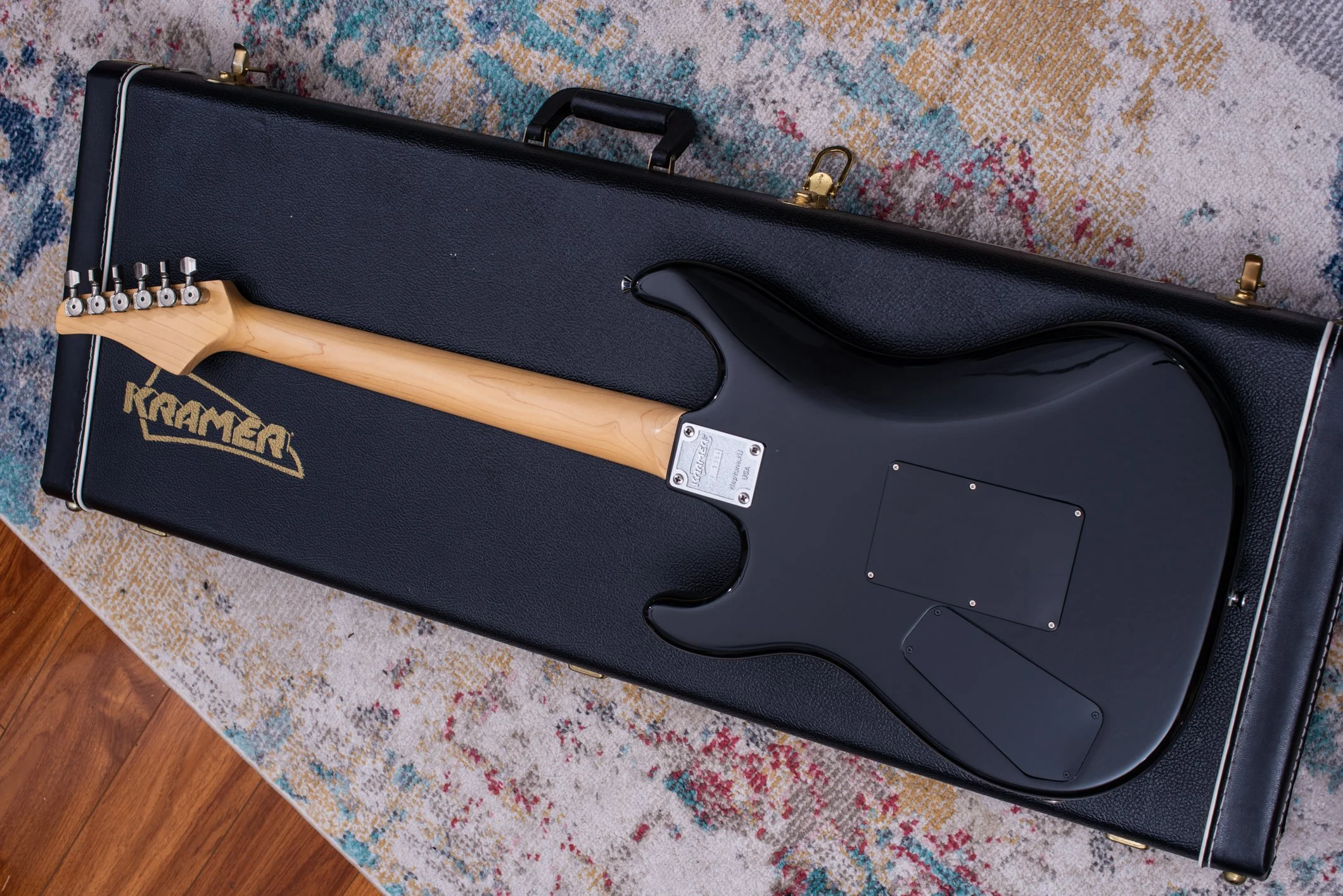
The body on the other hand is almost certainly a spare/NOS Kramer body, or at least it was made on the same tooling or to the same specs, right down to the cavity covers - probably an ESP body. The angular electronics cover is identical in size and shape to the bodies used starting from the end of the beak headstock era (Cxxxx serial number plates and up) and up until the switch to the 7/8 body shape (Fxxxx). The serial plate on this guitar is actually an 80s era chrome Fxxxx plate, and that is as built by Vaccaro in 1995, who likely had access to boxes of unused plates (most plates between F1000 and F3000 were never used on 80s Kramers, there’s a useful collector’s tip for you).

While it’s not the most exciting model or color in the Vaccaro lineup, it is a really sweet guitar to add to my collection, and an intriguing piece of a less known time in Kramer history.

The end of the Vaccaro Kramer story is a sad one, as investors pulled out which resulted in Gibson purchasing the brand in 1997. The high quality USA Kramers we could’ve had were done away with, replaced by Chinese made budget guitars with odd specifications and designs quite unlike past Kramers.


That brings me to the next guitar. By 2005, some renewed interest in the Kramer brand prompted Gibson to build a handful of models in Nashville. This included a USA-made Jersey Star and a Baretta 1985 Reissue. This is actually my second Baretta Reissue, I had a super minty red one which I sold and despite not falling in love with the neck, I do regret selling.

It’s nice to have a second chance to enjoy one of these, and while this one is definitely in a bit rougher condition than my previous one, the neck is unaffected and that’s what really matters to me when it comes to playing.

The body is a heavy, hard maple finished in white, but years in the sun have discolored this into a nice cream color. Features are simple - it’s equipped with a German made Original Floyd Rose bridge, a Kramer JS-91T Zebra pickup (Gibson’s take on a JBJ), and a single volume knob. Sadly a previous owner decked the Floyd, and with the sun damage that has resulted in a paint crack extending from the treble stud, up through the treble side pickup ring screws, all the way to the neck pocket. It’s subtle but quite clear in the right light.

Still, that doesn’t get in the way of a great sounding and playing guitar. The neck is completely bare, with a beautifully figured rosewood fretboard, R2 width nut, and Schaller M6 tuners just like the real ones from 85. My only gripe, same as I said when I got the red one, is that the neck is unfinished. Kramer made hundreds of Barettas in 1985 of which maybe a handful had custom order oil finished necks, the rest all had gloss - which I’d prefer. At least it’s not an R5.

Very minor complaints aside, this is a great playing guitar. Since the floyd is decked already anyway, it’s easy to tune up, change tunings, go to Drop D and so on, so it’s already getting a good amount of play time here.

These USA made Kramers made it until about 2008, when one last model was introduced, a Pacer Imperial Reissue (also with a bare neck, wtf?). These were the last Kramers made in the USA nearly 20 years ago. MSRP was $1849 in the catalog, but the Musicyo website was selling them for $1049 direct (see archive link here).

And sorry to keep complaining, but $1049 in 2006 is about $1700 inflation adjusted for 2025. Gibson has long since done away with USA made Kramers, and instead the top end Baretta is a Japanese made model for $2200. It’s really a shame that Gibson has not come out with a line or at least a model, made in the USA, for under $2000. I don’t know all of the logistical details but it’s hard for me to believe that it couldn’t be done. I very nearly purchased one of the MIJ 83 Barettas, used, which dropped as low as $1100 before selling - that’s the true value of those guitars in my humble opinion.

Okay, old (?) man yells at clouds segment over. I’m super excited to have these two guitars in the collection and put my hands on a piece of Kramer history.

More pictures are in my gallery section if you want to see them up close:

Vaccaro Pacer

White Baretta 06 Reissue

New Show: Winona Fighter at Will's Pub, Orlando FL

I’ve gone back and forth on this idea for a long time now and I’ve finally decided to do it - and that’s talking about concerts or music that I listen to. Just to temper your expectations, I’m not some kind of musical expert, and I’m a little too cheap to go to some of the big fancy concerts, but I really enjoy a small bar show. That means I have to really like an act to go see them live, because I’m perfectly happy to listen to the recorded tracks in the comfort of my home.

I should also mention that my musical taste is both eccentric, outdated, and at times ill-formed. I regularly discover or re-discover songs or bands from my youth, or even as far back as the 1920s or 30s, so I guess I’m the opposite of the “you probably haven’t heard of my favorite band” hipster type. If I say something obvious or stupid to hardcore fans of a given band, sorry in advance.


Okay, introduction to this new category out of the way, I want to talk about a band I saw this past weekend here in Florida: Winona Fighter. The first time I heard them was a few years ago via a YouTube “your mix” playlist - lately a way I’ve actually discovered a lot of cool music. This track was just one of many thrown into a mix of other rock music but it kind of stayed in the background for a little while for me. Here’s that video:

Album/Recorded Music

Then sometime this summer, another music video popped up in my feed by the same band (“I’m In The Market To Please No One”), then another. I was getting pretty into the vibe of the music, so I went ahead and downloaded the whole album “My Apologies To The Chef” which released this year on February 14th, with a Deluxe Version as recently as September 5th 2025. These albums include the 3-year old song I heard first on YouTube, and that’s probably still their most popular song but I could be wrong there. If I had to pick a favorite, I’m really not sure I could - I love the whole album start to finish and they are all roughly the same kind of vibe, which makes for easy listening if you’re in the mood. I guess “Swear To God That I’m (FINE)” is the one that gets stuck in my head the most.

They have also done a great job on the music videos, in fact most of the songs on the album have a video which is really cool. Much like the music, they all have a similar filming and story style. I suppose that’s risky, but if you’re into it like I am it’s a huge win because I can enjoy a long sitting of just WF songs/videos. On the other hand, if you listen to one or two and you don’t like it, there probably isn’t anything else here for you, and that’s fine. Still, I’d keep an eye on this band’s next album because even from their first “album” (or EP? Demo?) there’s a pretty noticeable uptick in cool guitar parts, catchy lyrics, and production quality. That’s not to say the stuff on “Father Figure” isn’t excellent, songs like “Wlbrn St Tvrn” are still regulars on my playlist and are included in the newest full album release.

Just take a look at the quality difference between that first video and their more recent ones - not just the cinematography and lighting, but the acting, lip syncing, the movment, and the charm that holds it all together.

Live Review

I arrived at Will’s late Saturday night, pretty close to show time to meet up with some friends, and we staked out a corner just off the wall between the stage and the bar. The opening act was a DJ playing some emo/screamo music, of which I recognized a handful of songs but I’ll be honest it wasn’t all that thrilling and the vibe was totally off for what the band was going to play. You’d think we were there to see a metal show based on the opener, but to be fair this was the same weekend as Warped Tour so there was probably some crossover in interests there (and WF also played a set at Warped Tour the day after this show).

The vibe definitely skyrocketed when WF took the stage, and right from the moment she stepped on stage, Coco (our lead vocalist and primary songwriter) was a huge for hyping up the small crowd which was maybe 50 people or less. Her energy was infectious really, once they got the gear hooked up she’d throw a shoulder check at the guitarist and bass player and you could tell she really wanted to be there. They started right off with “You Look Like A Drunk Phoebe Bridgers,” and the movement from the band was great and got everybody right into it, and she carried that energy straight through until the end of the show with only a few breaks in between to talk to the audience. They basically played the whole standard version of the album, plus their cover of “Sabotage” (Beastie Boys), didn’t skip any songs, and played for over an hour - awesome. They did play them out of order and it’s been a long time since I’ve been to a show where I can’t just check setlist.fm to see what they played, so sorry I don’t remember other than they ended with “Wlbrn St Tvrn.”

I also hate people who spend a whole concert filming instead of enjoying themselves, but I forced myself to snag about a minute of “I’m In The Market To Please No One” for you all:

All in all, it was a pretty down to roots, plain old rock concert. Just what I wanted. And perhaps I’ll sound like a bit uncool here, but they were loud enough to have a great time but no piercing loud noises that made me want to put in my earplugs (which I take to every concert now after a few bad experiences).

Technical Stuff

This wouldn’t be Totally Rad Guitars if I didn’t talk about some of the technical stuff of course. The guitar player played a EVH 5150 Standard Series with a maple fretboard and hot pink finish, which of course is right up my alley in terms of guitar style. At other times he played a Gibson Flying V, and if I had to guess these are the same guitars shown in the various music videos. I’m not a bass player, but I’m pretty sure he was playing a Duff McKagan Deluxe Precision Bass with super cool block inlays and a black painted neck. Our front woman didn’t play guitar on every song, but she did on quite a few and used a Squier Sonic Esquire H in Lime Green finish, which I’m pretty certain I heard her say during the show that she had bought either that day or the day before.

In terms of amps… well, there was a Marshall 2525C but I’m almost positive that was the backup/house amp, but to be fair I didn’t get a great look at Coco’s pedalboard before they wrapped up so she may have been using that amp. The lead guitar player Dan played the entire show with his primary amp being a Universal Audio Lion floor pedal. I have to say, it sounded absolutely fantastic and I have no complaints about the tone at all, and that’s coming from a guy sitting in a room with 70 amps. Sure I’m a tube amp purist at times, but I bet being able to pack up two guitars and a handful of pedals to play a whole rock show must be awesome. Even if you brought a backup and power supply, it’d still be less stuff than even one amp head. It’s not the kind of music that needs a lot of pedals - I should’ve taken a picture of the board - but I’m pretty sure all I saw was a tuner and a delay, maybe there was a boost in there but I don’t think I saw more than 4 pedals on the whole board. I had the chance to talk to him after the show but I missed him, oops - this won’t be the last time I see this band though I’ll say that for sure.

I don’t know much about the other gear here, but I will say, that Coco used a wired mic the entire time which was pretty wild considering how active she was on stage. She even lifted the cord up over her shoulder and went down into the crowd for a little bit on one song and there were no equipment issues, trips, or malfunctions at least that I noticed. All in all I thought it was a really professional and great sounding show and considering the equipment that’s really impressive - maybe it sounds hypocritical of me to say but this is just more proof that you don’t need a bunch of fancy expensive equipment to write great songs, sound good, and entertain a crowd.

Final Thoughts

Look, even for bands I really like, I don’t buy merch, I don’t buy CD’s, I don’t even drink or if I do it’s a rare occasion. Despite my amp/guitar collection obsession, I’m painfully frugal. What I’m trying to say is, I bought a $60 sweatshirt and their CD at this show, that’s how good it was. Go see them next time they are near you, I paid a minuscule $25 for the ticket, and that has to be one of the best price to fun ratios I’ve ever had, at any concert.

At the time of writing, they are headed west and stopping at a few places along the way, but they’ll be back in Florida in May 2026 for the Rockville festival. I’m not a big festival guy but I’ll be watching closely to see if they play any bars around that date next year.

Check out their official website here: https://winonafighter.com/

New Guitars: Gorgeous Pair of late 80s Carvin DC400's

I occasionally look for old pointy headstock Carvins but they seem to rarely come up for sale, so when I spotted a green 1990 DC400 one evening I was thrilled. I looked through the pictures to check the condition but I was already pretty sure I was going to buy it, but then I got to the last picture in the listing. Next to the green one was another, very similarly optioned blue DC400 - not yet listed for sale. Luckily, the shop that had these was located near me here in Florida so I set an alarm and called them immediately when they opened the next morning to ask about it.

Lucky for me, they still had both of them and I worked out a cash deal over the phone. Later the same afternoon, I took a long afternoon drive down to DB Music where I picked up both guitars.

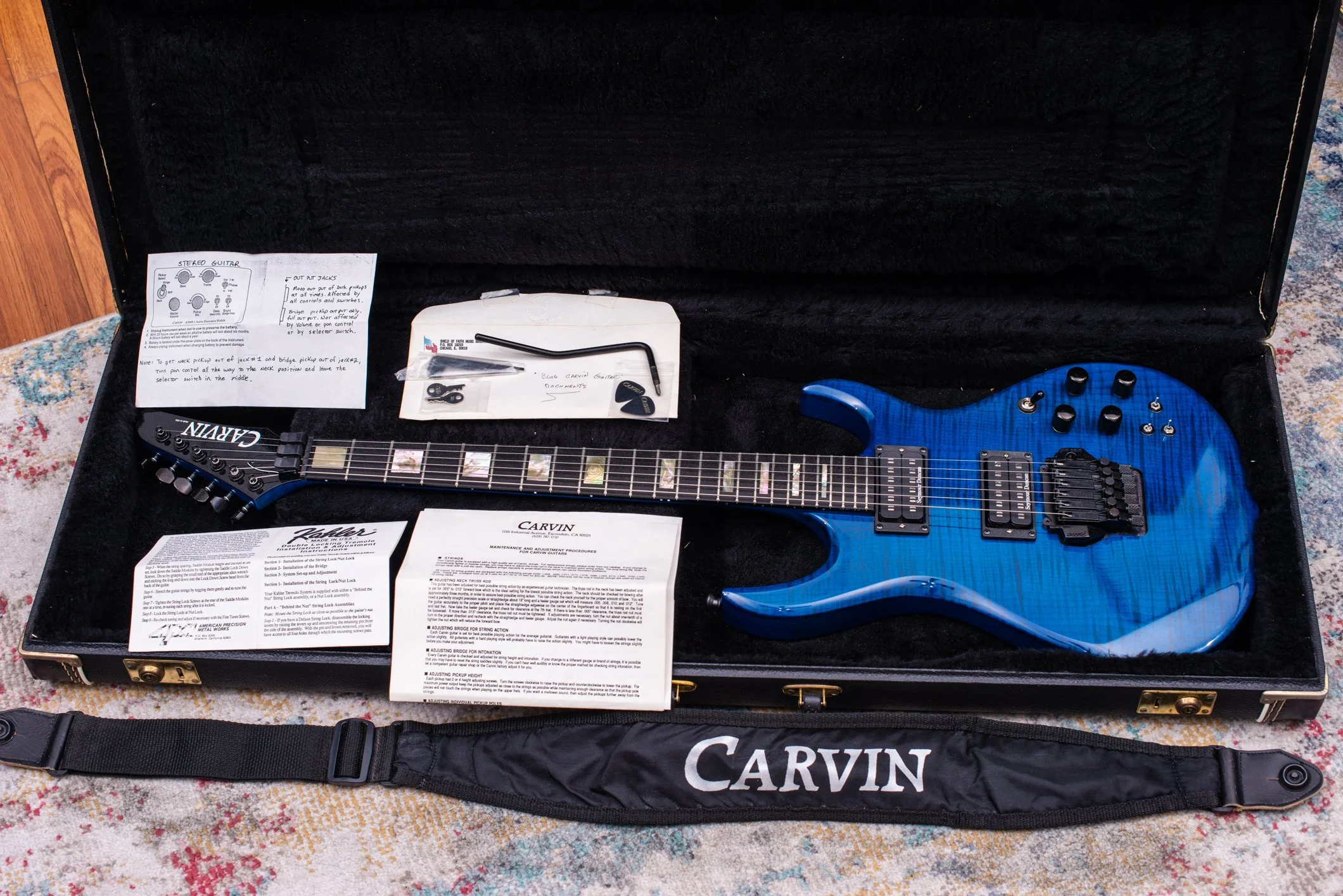
These two were clearly well cared for, both kept in cases with no major blemishes to speak of. That’s quite a feat considering how fragile these pointy headstocks can be. Much of the original paperwork is intact, along with (slightly dryrotted) Carvin straps and nice condition hard cases. Modifications are minimal, but more on that later.

I should also add some context for those unfamiliar with Carvins at this time. These were made to order instruments from a list of available options. These options changed over time and some builds take longer than others, much like any other guitar custom shop. However, they were priced very aggressively, comparable to standard production line USA made guitars of the time. It’s a great value prospect and I’m always surprised they didn’t sell a lot more of them, but part of the factory direct style means you wouldn’t see these in a store unless you lived near the Carvin showroom in California. Without budget models and a thinner artist roster than others, I really just think people didn’t know about them or were afraid to risk mailing a thousand dollar check across the country in an era that long predates common internet sales.

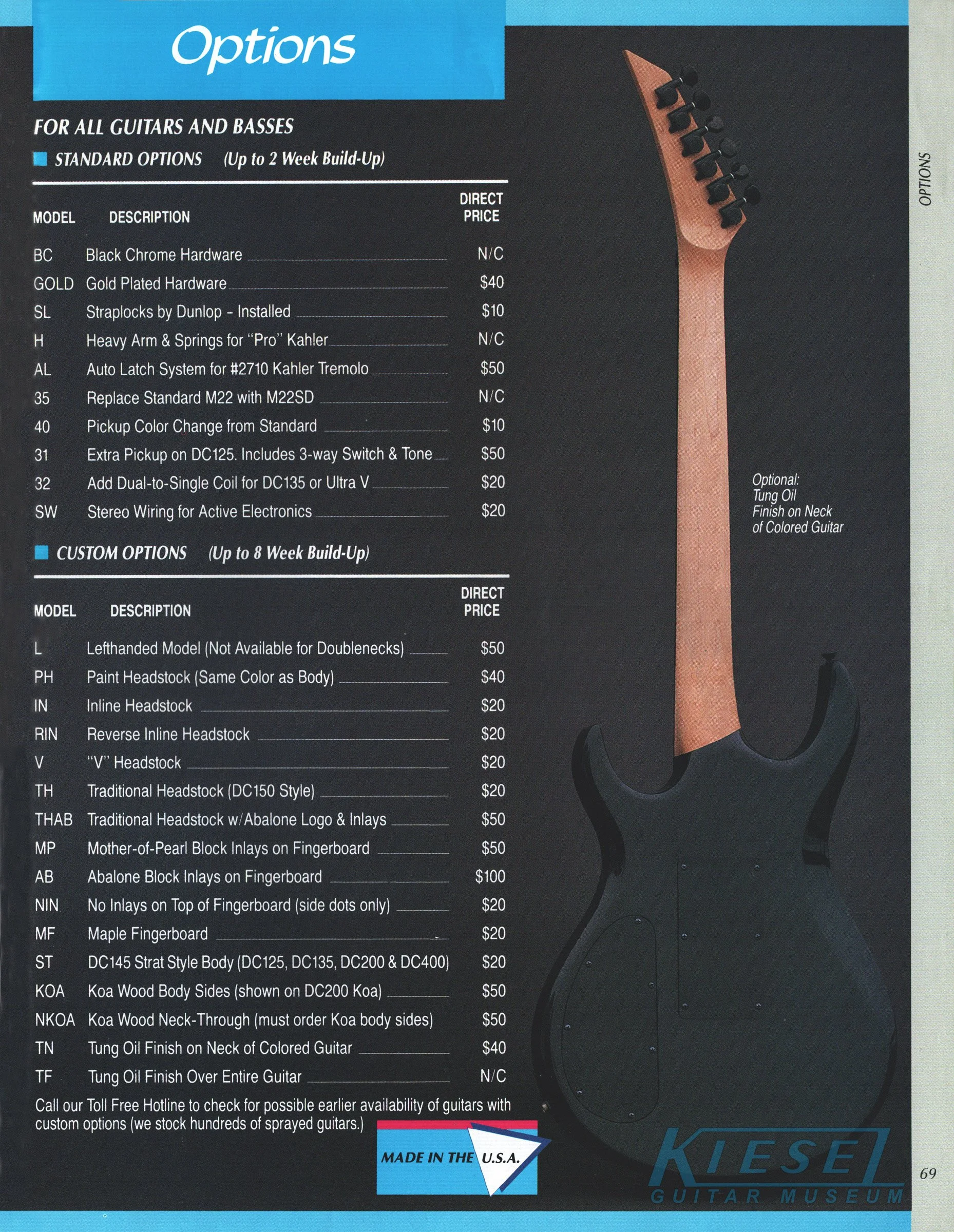
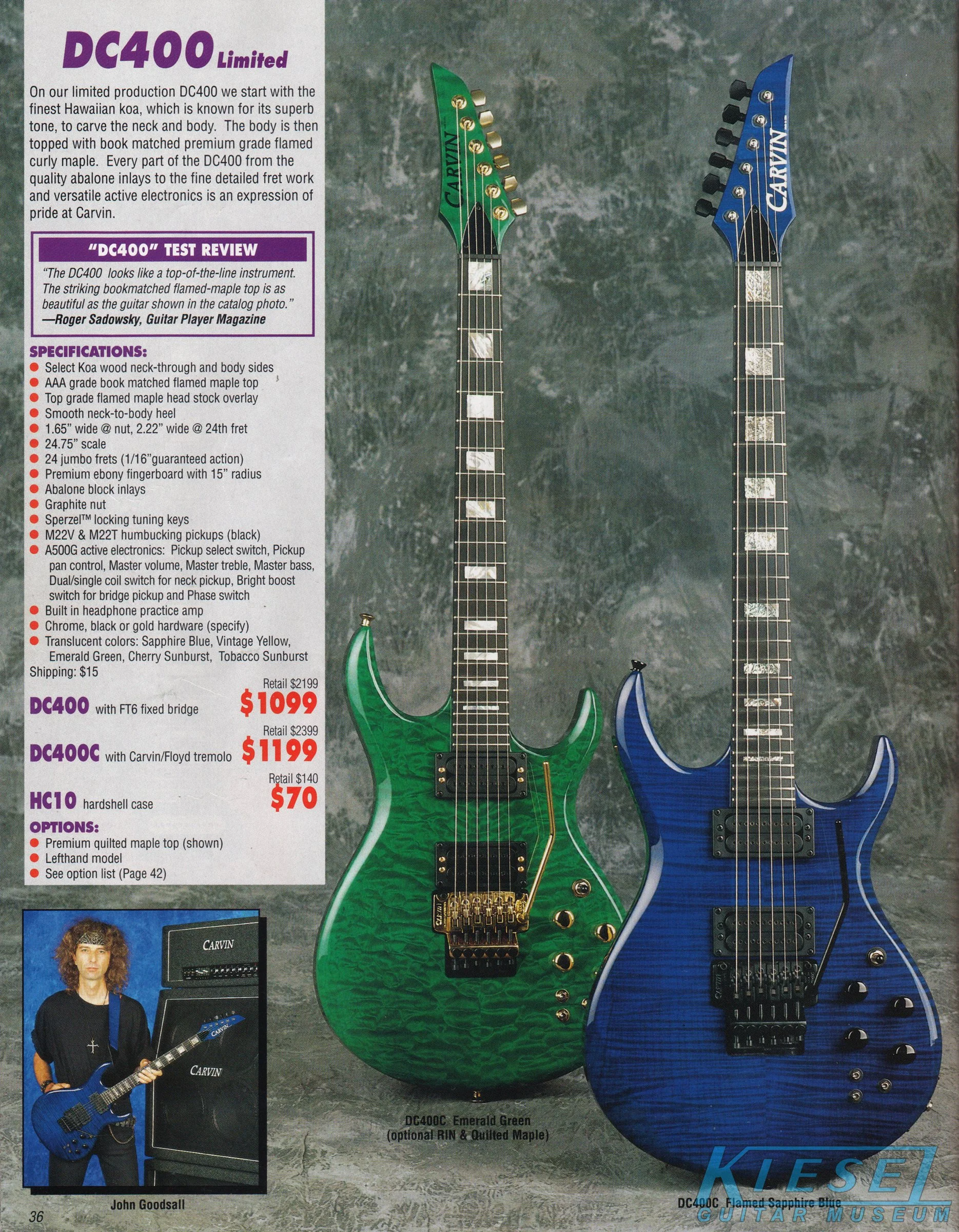
From a modern standpoint as a collector, the biggest drawback for me besides the difficulty in finding these instruments is simply that a lot of options someone else might’ve chosen are ones that I find mediocre, or at worst actively dislike. For example, a relatively common option I’ve seen is to have the back of the neck tung oiled - I hate this on an otherwise glossy neck through guitar. I know this trend has had a popular resurgence recently but I think it looks cheap to simply tape off a line at the neck heel and headstock and leave a big chunk of the guitar unfinished or with a different finish. Example in the below catalog picture, which also gives a sampling of some options available on any guitar model (some options were also model specific).

So of course, finding two DC400’s, the top of the line model, with pointy headstocks (a rarity already), and most importantly without any bad option choices is very exciting for me.

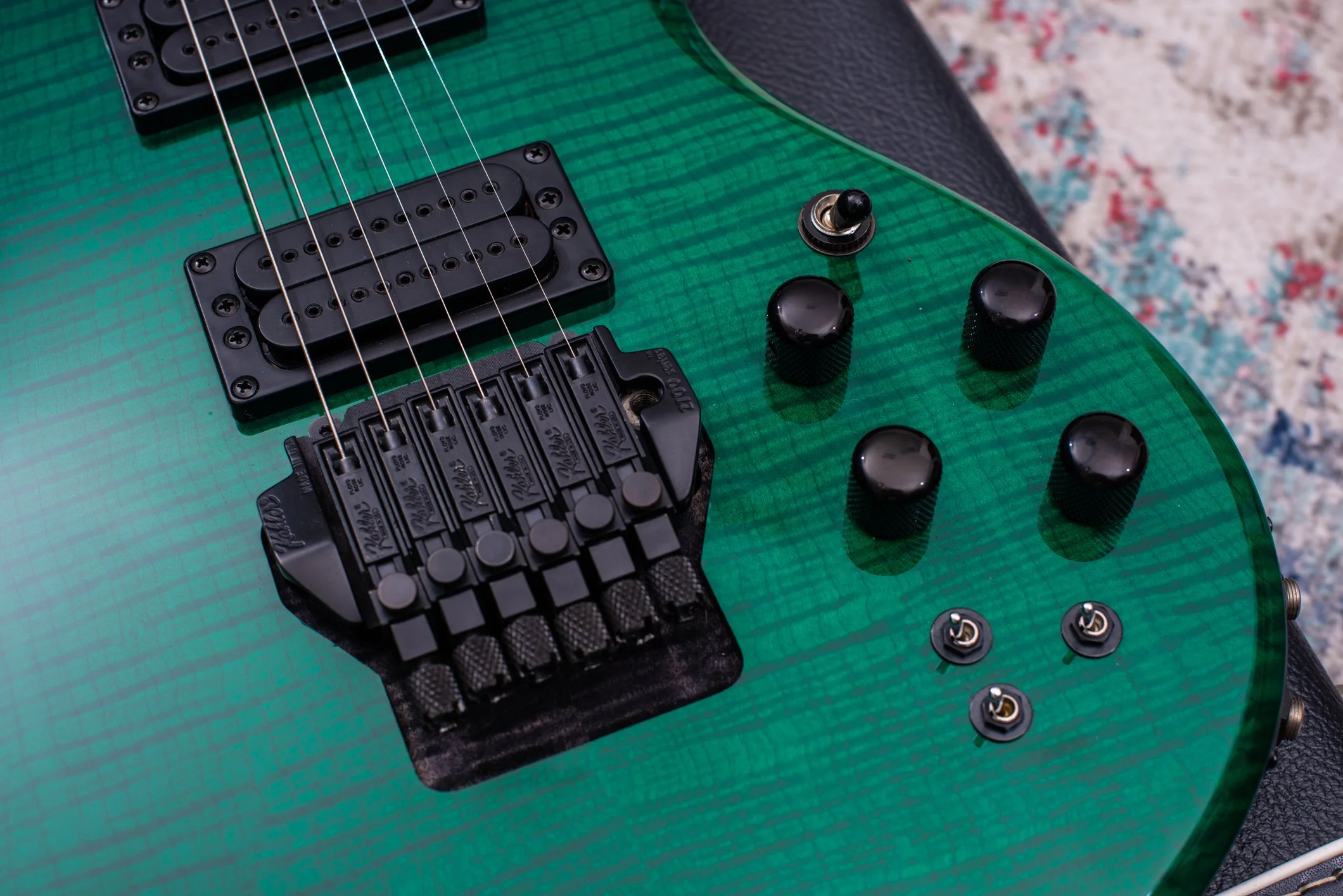
Let’s run through them in detail now. First, a few things that both of them have in common. Since they are both DC400’s, they have highly flamed maple tops with a nice transparent gloss finish that really shows off the wood grain. Both have real abalone block inlays on an ebony fretboard with a 14” radius, black hardware, weigh a ton, and have push-tab style locking nuts. They both have the “1990+” headstock shape, which replaced the previous “Jackson style” pointy. However there is a transition period here, likely depending on order or build time, because both of these guitars have 1990 style headstocks but options like the Kahler Killer which was only available in 1989. My more standard model DC125 has a serial number in between these two DC400’s but has the old Jackson-style pointy headstock. That guitar was probably built and shipped a lot faster than these because it didn’t have custom woods, bridges, or a figured top.

Both of these guitars are neck-through construction and feature 24.75” scale necks. This scale was only available from 1979-1992, and if you wanted a pointy headstock on that scale length it was only 1988-1991.

The most unique option that they both share is the bridge choice, which is a Kahler 2710 Killer. This was Kahler’s absolute top of the line bridge for 1989 and was only made for one or two years before being discontinued. It’s technically part of the 2700 series alongside the 2760 Steeler, which is roughly equivalent to a real OFR, and the 2720 Spyder, which is a more budget oriented model. These were all made in the USA too, though that means your 6mm whammy bars won’t fit (these use Imperial sized arms). The Killer also has a unique feature called the “autolatch” which can set the bridge to a fixed state by simply turning the trem arm, so the Killer trem arms also have a piece at the bottom of the threading that is flat which turns a mechanism related to this. Usually neat little gimmicks like this get forgotten, parts lost, and then you pay through the nose if you even want to try it (I see that $189 autolatch on whammyparts), so it’s also really lucky that both of these guitars had the correct whammy bars AND autolatch pieces, plus paperwork and screws, in the cases. Really awesome find and another sign that somebody really cared about these instruments.

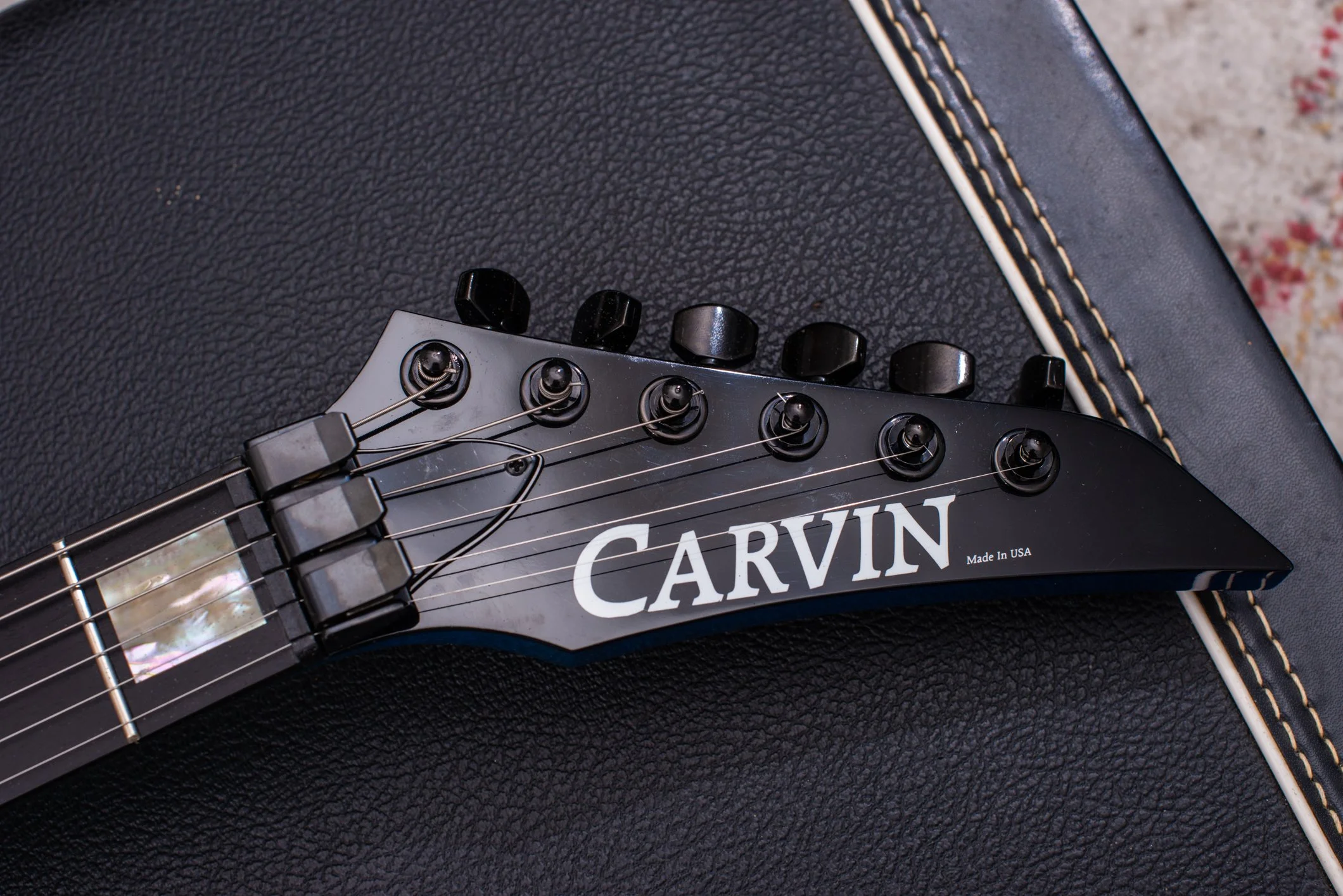
Okay, now for the differences, starting with the green one. This guitar has a few really special options, and it has a later serial number so it’s probably a bit further into 1990 than the blue. Easily noticeable is the reversed headstock, but it also has a color matched flame maple cap on the headstock to match the body top. The black Carvin logo is a little hard to read but looks great in the right light.

In addition, the body and neck is made from Koa, which was a $100 option for 1989 but standard on the DC400 by 1990, so it’s hard to know if this was ordered specifically or not. Either way, it looks great up close but it’s a bit darker than alder or maple would be especially in a color like green which naturally shifts a bit darker. The neck is also a very odd 2-piece design, which I’ve only seen on other Carvins of this same era. Usually multi-piece necks are 3 pieces or some other odd number so that each piece flexes against the other and that adds stability to prevent twisting, or at least that’s the idea. I’m not sure how much worse a 2-piece neck might be but there is no sign of twisting or warping and this guitar is at least 35 years old now so it seems stable enough to me.

Electronics are all stock on this one, with M22 humbucking pickups and the stock active electronics circuit intact. The controls have a good effect on the sound without being unusable at the extremes, so it’s nicely balanced. I did have occasional noise issues with it through certain amps and pedals though, so there is probably an impedance mismatch that doesn’t play nice with certain equipment. This also changes the controls a bit from what I normally expect when I see this arrangement. There is one master volume knob, then a “pan” knob that can be used with the stereo output jacks to separate which pickup output goes to which, or combine them together… not sure how to use that feature effectively but it’s interesting. The bottom two knobs are bass and treble, which can both boost and cut those frequencies, and there is a very nice feeling tactile detent in the middle position to let you know when you are at flat EQ. It has a 3-way toggle switch for the pickups, and 3 additional mini-toggle switches which can take the pickups out of phase or split the coils of the neck and bridge humbuckers respectively. Confusingly, the coil tap controls are called “Bright” for the bridge and “Deep” for the neck, but it’s clear listening to the amp that it’s simply a single coil mode.

Now for the blue one. This guitar has a black painted, non-reversed headstock, with the large white Carvin logo. This look was actually pretty cool and there’s a reason they brought this option back nearly two decades later (the “large” logo wasn’t available for some time).

The body and neck are both maple, with the neck being very highly flamed which looks fantastic. It’s a little more flamed on one side than the other, but it happens to the side facing you when playing so I really can’t complain. Unlike the other one, this is a one piece neck although the headstock does have a second piece glued on to make the pointy shape. The light color of the maple also means the blue comes out very bright and contrasty which looks great.

This one has been modified a bit in the electronics area. The active electronics have been discarded and the Carvin M22’s it originally would’ve come with are also gone. Instead there is a pair of Seymour Duncan PATB-3 Blues Saraceno pickups, the same pickup in both bridge and neck positions. I’ve used this pickup before and really loved in the neck position, but not as much in the bridge, and I still feel that way here. I just like the standard PATB-1 a lot, which I have a spare of, so I’ll probably swap that in at some point. I do love the idea of an H-H guitar with both pickups being PATB’s. With the active electronics gone, it has a more traditional control scheme much like the DC200 model of the same era. That’s two volumes, two tones, and a 3-way selector switch. For the moment, one mini toggle is a phase switch, one coil splits both pickups, and the third is disconnected. I’ll probably rewire it so that each pickup can be split separately by their own mini-switch, the same way my Koa DC200 is set up.

That’s about it. Really awesome guitars that play and sound great. I’ve played older Carvins before, in fact one of my first ever experiences with guitars in general was when I was just starting out in high school and my computer science teacher brought in a 1985 Carvin DC200, white with gold hardware, and a Tom Sholz Rockman for me to play a few times during class. I feel that if Kramer, Jackson, Charvel, etc took Fender as their source DNA to built into super-strats, Carvin came at it with a bit more of a “Gibson” influence. Basically, instead of taking a lightweight SSS bolt-on and putting humbuckers and big frets on it, they took a heavy Les Paul and trimmed it down a bit. When the Carvin DC200 launched in 1981, it was a 24.75” scale set-necked guitar, which evolved from the earlier DC150/160 and CM series (which was a single-cut LP style), so that backs up my thoughts there.

One last picture I found while doing some research - the catalog photo for the DC400 in 1992 features two guitars - one blue, one green with a reversed headstock. There are lots of differences (scale length, bridge, headstock shape, quilted tops, gold hardware) but I thought it was cool how similar this catalog page is to this pair.

More pictures and information available on each guitar’s collection page, links below:

Blue Carvin DC400

Green Carvin DC400

New Guitar: White 82 Pacer Custom + Finally finished a project

I watched this on Reverb for a little while and finally decided to make an offer. Lately, I’ve really been gathering up the earlier Kramers and I have a soft spot for these non-Floyd models. They have a certain appeal, not too different from some of the recent Charvels like the DK24 or the just released Kramer Pacer Deluxe GT. Of course, I still love a Floyd Rose (feels like home to me), but it’s nice to have something I can pick up easily and change tunings on the fly when I’m just messing around.

The white finish is original and looks quite clean from a distance, but up close you can tell this is a 43+ year old guitar with some small dings and scratches. Still, it’s impressive how bright it is, with not much yellowing of the clear coat. Even the brass traditional tremolo is still relatively bright and not too tarnished like some of my more played examples get.

It arrived with the original Schaller pickups installed, but sadly the bridge humbucker had a short between the coils. I’m fairly technical but I’ve never attempted a pickup repair, and my understanding is that many times they need to be rewound on a machine to properly repair shorts like this. I see some services online that offer this, now that I have two vintage Schallers with shorts, it may be worth getting them repaired. In the past, I’ve just bought replacements, as 80s Schaller pickups used to be 40 bucks each but a quick skim of other Reverb listings and it’s hard to find one under $100 now.

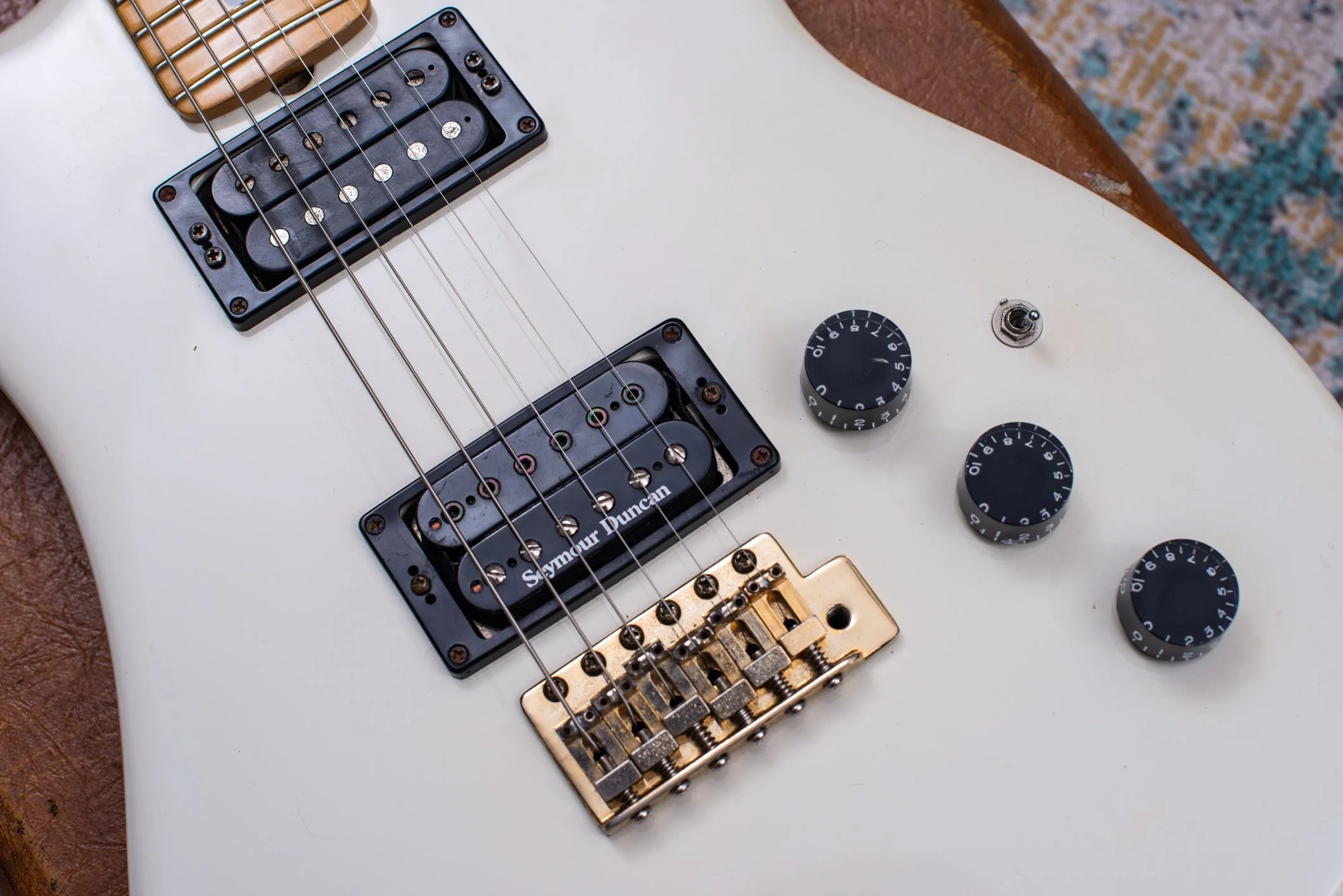
For the time being, I looked through my spare parts drawer and decided to install a Seymour Duncan SH-12 Screamin’ Demon. I originally got this pickup in a black Pacer Imperial and hardly got to enjoy it, so it’s nice to hear it again. It’s probably a hair higher output than the stock Schaller would be but not as intense as a JB (and I have so many other Kramers with JB’s in them). I also like the wiring on these earlier ones, with two volume controls and a master tone control, which lets me set my neck pickup to a quieter volume (or off) for some unique mixing or easy crunch-to-clean at the flick of a switch.

The maple neck is glossy and clean, with vintage sized frets and a fairly curved fretboard radius that makes it very comfortable to play. I just love these necks, made by ESP (yes, even this early). The original case rounds out the package, with the original manual and warranty form, although the serial number written on the tag is not the same as this guitar (seller mistake maybe?). Either way, a great addition.

More pictures here


I also finally got around to completing an old project. When I realized the bridge pickup was shorted on this guitar, I started looking through my stuff to see if I had any spare Schaller humbuckers, or Schallers installed in a guitar that doesn’t normally have them. I got out a handful of guitars including this well worn Red Pacer Deluxe. The Schaller I had in it was wrong for the white Pacer Custom (it was a 2-in-1 and dated ‘84, too new for ~‘82), but realized I never finished this project.

Originally, I had gotten it with a mirrored red pickguard, with a pair of 80s era Seymour Duncan Customs installed, a single volume, and tone "switches.” The previous owner had routed the body under the pickguard to fit the humbucker at the neck, and the entire cavity is completely coated in copper film - a very nice job. Here is that configuration below:

It was definitely a unique look, and I did keep this pickguard intact exactly as it was installed if I ever want to restore this. However, I really like the stock black pickguard look so I bought two pickguards from Warmoth, both single ply matte black, without any controls routed. One of these was HSS and the other HH. I can’t remember exactly why, but somehow I ended up installing a Schaller 2-in-1 in the bridge position and a 90s PATB-3 in the neck, with a 5-way blade switch with two dead spots, and no pots. It was technically “playable” but not ideal, although I do like the super clean look - it’d be even cooler with black covered pickups (like EMG’s or similar). I will say the PATB-3 made a fantastic neck pickup though, it sounds great in that position. This is what that looked like:

Ultimately though, I wanted to add a traditional volume knob and replace the unnecessary 5-way blade switch with a 3-way switch. I could’ve gone with an enhanced 5-way to add coil splitting options but I really just wanted something more simple… and I didn’t want to buy more parts, just use what I already have on hand. A while back I also picked up a set of Dimarzio D-Activator X’s, which I tested out briefly but didn’t really get to enjoy. I’d prefer this Schaller 2-in-1 be saved for later (or installed in the HSS pickguard, as it would’ve been stock in a Pacer Deluxe), and I also have a spare PATB-1 so I wanted the PATB-3 to be freed up for some other guitar later. So I drilled a hole for a volume pot and wired up the D-Activator X’s and sent the others to the parts bin for later use. Here’s what that looks like:

Still pretty clean, a little flair with the cream coils, and I had a nice orphaned chrome volume knob to complete the look. I’m really impressed with these pickups too, obviously super high output but the neck position is still bright and cutting. I’ve had an X2N before, which on paper should be similar to the DA-X, but I didn’t quite get along with it. The slightly mismatched coils on the DA-X (“Dual Resonance”) make a noticeable difference in the high end and there’s a lot more air in the highs while still being super high output.

Both the X2N and the DA-X have a bit of a “boosted” feel, compared to a lower output pickup (like the SH-12 on the white Pacer above, which I played through the same amp on the same day). The difference is that the X2N’s boost is broader, therefore lower frequencies a little muddier, but in its defense maybe a bit more “natural” sounding. The DA-X is still very saturated but it feels like the focus is shifted higher up into the mids. It's sort of like the difference between boosting an amp with a Klon/Klone or a Tubescreamer. The Tubescreamer has a hump in the mid frequencies that adds a lot of bite and makes palm mutes really stand out, while the Klone style circuit is flatter and just feels like the amp itself with the gain turned up a bit more. Same thing here with these pickups. In short, I no longer own an X2N (and while I have a Klone, I rarely use it).

The cooper shielding in the cavity also means that this guitar is incredibly quiet, even plugged into a high-gain amp. In fact, it’s opened my eyes to this a little bit, I don’t think I live somewhere with particularly difficult electrical or radio interference but I have to wonder if copper tape could help some of my other guitars that are a little less protected. I don’t plan on doing any drastic mods, and as a collector I do intentionally appreciate things “as they were” including flaws/noise, but still something I’ll be keeping in mind for future projects.

I’ll get to work on wiring up the HSS version of the pickguard for this guitar, but I’m quite pleased with how this turned out. This guitar is tuned to Drop C by default so now it has the pickups to match for the heavier stuff. I’m getting out of building “projects” in general, slowly selling off my spare necks/bodies/parts, so it especially feels good to have this complete instead of in limbo.

More pictures here

New Guitar: 2025 Kramer Pacer Deluxe 87 EMG Flip Flop Blue

I never buy new guitars. There just isn’t very much out there these days that appeals to me, and there are so many really fantastic guitars on the used market. So I was quite surprised to see this guitar come out under the radar last week. In fact, I only found out it existed because I saw a couple of new Pacer Deluxes in my reverb feed and looked those up. I’m not chronically online but they didn’t post about it on Instagram or anywhere else I could find for that matter.

Presenting only the second brand new guitar I’ve ever bought:

I’ve said multiple times in the past that if the current Kramer company, owned by Gibson, ever came out with a true 80s style model, especially a Pacer Deluxe (my favorite model), I’d buy one. The caveat to that was that I expected it to be made in the USA, in the same way that Gibson made reissues in the past. The 2005-2008 Baretta 85 RI wasn’t quite the model I wanted, but it clearly had a lot of attention paid in its production, they borrowed/bought real 1985 Barettas for sampling, and meticulously measured and built those as close to spec as possible with only very minor changes. Same goes for the 2008 Pacer Imperials. This isn’t exactly how I imagined a Pacer Deluxe Reissue but I want to support building this type of guitar and I want to see more, so I felt a little bit obligated to buy one. I ordered mine the day it came out, and it was sold out in less than 3 days. I guess there’s a lot more Reb Beach fans out there than I realized.

It really pains me to put the gallery page for this guitar into the “Kramer Other” section of my site instead of the “Kramer American” page. It’s not just where it is made though - I have no problem with guitars made in China like this one. I’m well aware that even the American series from the 80s were mostly parts made in Japan by ESP. There’s no avoiding this discussion and it’s such a shame that any review is going to be colored by the most notable part of the guitar: the price. It’s $1499 and available exclusively from the official Kramer website. Adjusted for inflation, that’s nearly the same as the USA-made 2008 Reissue (which was $1099 at the time).

That’s a lot of money for a MIC instrument, but I could deal with that if that price premium meant it was a top quality piece made to an exacting standard. It’s not a bad guitar by any means, but there are a lot of misses compared to a real 1987 Pacer, and many of them are relatively easy to fix. If Fender can make Stratocasters in the USA for $1300 (current Sweetwater price at time of writing), and Ibanez can make RG Genesis guitars at Fujigen in Japan, I’m not sure I understand why the price is so high. Yeah, I know with inflation my 80s Pacers (which were $1119 in 1987) would be $3000 new today, but there are USA made Charvels for $2500 and I’d happily buy a USA Kramer at that price too.

You could argue that it’s not a true reissue. I get that, it’s clearly a tribute to Reb Beach’s Pacer Deluxe from the Winger days. I’ll call it “reissue adjacent,” because it’s not like they put “87” in the model name because it was someone’s favorite number. The thing is, they got a lot wrong either way when it comes to the small details. And even if I ignore the reissue/Winger connection, and just treat it as a any regular new guitar, why would I pay $1500+ for a guitar that is not built as nicely as a Mexican Charvel, USA Strat, or MIJ Ibanez which cost the same or less?

I have a lot of minor complaints but they all add to something more when factoring in the price. It’s not a terrible guitar, the finish while not even close to real 80s flip flop blue is still a great looking chromashift color. Honestly, it looks like the guitar from the Seventeen music video so they nailed that - Reb Beach’s guitar wasn’t ff blue anyway. It had an awful setup out of the box with super high action, but after lowering the Floyd it feels a lot better. The Floyd recess is so shallow that you can hardly pull up on the bar which is such an odd design decision for an 80s shred guitar. The EMG’s… sound like EMG’s, you either love or hate them. They are USA made EMG’s, and the body has a “swimming pool” pickup route so you could do whatever combo of pickups you please if you wanted to modify it. From a purely functional perspective it’s a nice, average quality guitar.

I have a lot more thoughts about it, so I made a video. As an added bonus, I do a deep dive on Reb Beach’s Pacer Deluxe which this is clearly inspired by.

New Guitar: Early Kramer Pacer Custom

Lately, believe it or not, I have been trying to downsize my collection. It’s hard to turn off my “jump on a good deal” impulse, but I’ve really been trying to really think about what guitars I want to keep. I don’t own everything on this site anymore, but I do still have a lot of guitars and sometimes I feel like I spend more time shopping, researching, and writing about guitars than I do actually playing them and I’m a worse musician for it.

Part of that soul-searching process has led me to identify that I have a real soft spot for the earliest wood necked Kramer guitars. There’s something about them that is just special, a sense of occasion to getting one out to play it and being immersed in it. The smell of the old leather in the case reminds me of my Members Only jacket, the weight of the substantial maple body pulling on my shoulder, the feel of the old brass fittings and small frets (what we’d describe as “vintage” frets today). It’s just endlessly fascinating to me to play an instrument that was groundbreaking and modern for the time, nearly 45 years after it was built.

That brings me to today’s guitar, which is a 1982 (or perhaps late ‘81) Kramer Pacer Custom in a gorgeous “blue burst” finish.

There are a few noteworthy features of this very early serial number (B0392). For context, wood necked Kramers started around A7000 and rolled over into “B” after A9999. Within that rough range, many were still aluminum necks like the “Duke,” and quite a few were basses, so this is definitely one of the earliest guitars with the “beak” headstock shape.

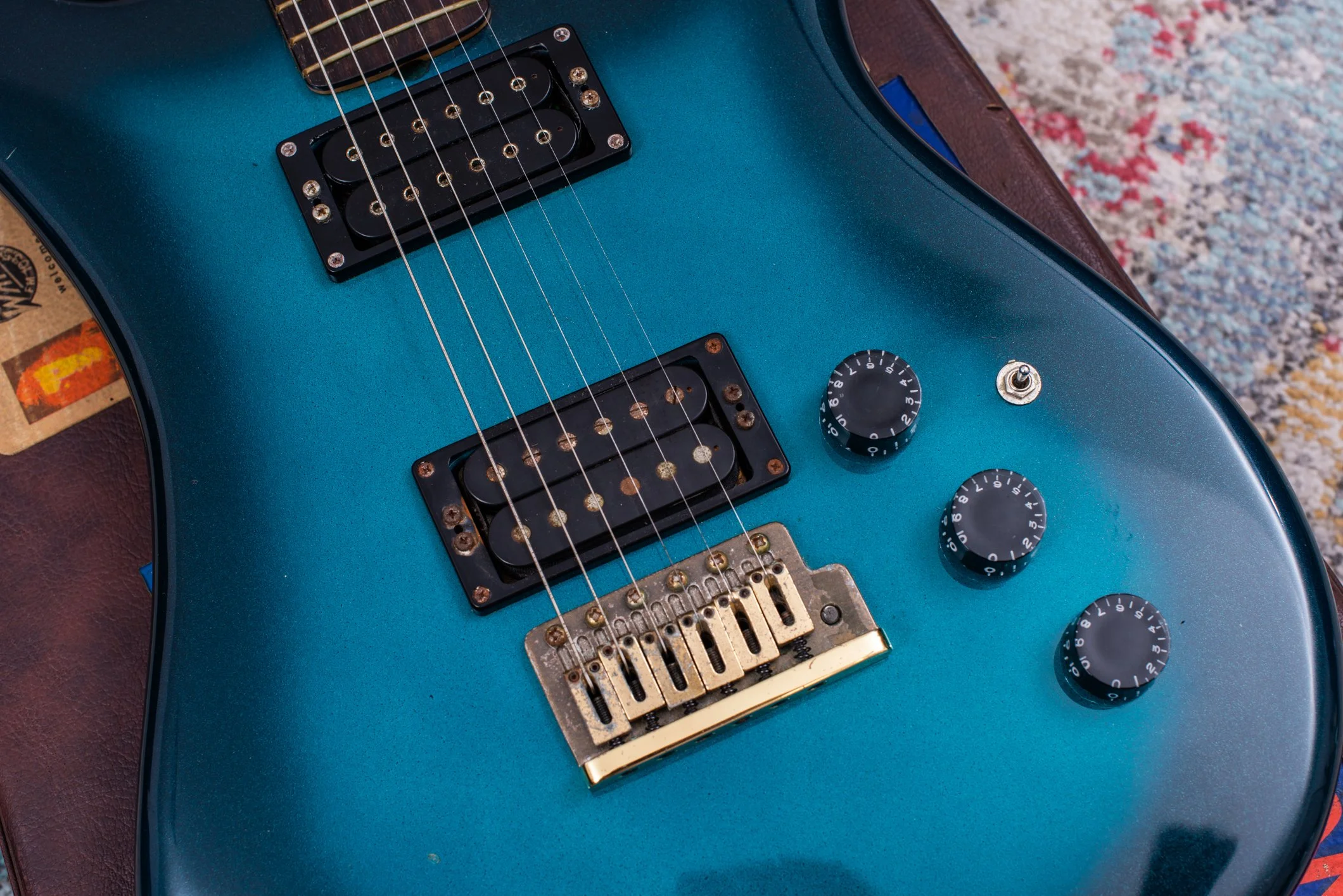
The first thing I want to point out is the bridge, which ties in to the name of this model. This is a Pacer “Custom,” which at this time in Kramer history means it has two humbucker pickups and a brass 6-screw standard tremolo. The better known Pacer “Imperial” in these early days had the same HH configuration but with the ESP Flicker tremolo. By 1982, the Imperial was upgraded to the “Edward Van Halen Tremolo” which was the Rockinger bridge, but the Pacer Custom kept the standard tremolo. Then of course by 1983 you’d start to see Floyd Rose bridges replacing the Rockingers on Imperial models and the Custom model with its standard bridge was dropped entirely by then. Technically you could still order the Flicker bridge throughout this time but it was no longer on the standard catalog models.

The “Custom” moniker did return in mid-1986 but this was an entirely different guitar, using a different body shape, floyd rose bridge, and HSS pickup configuration. This model quickly became the “Pacer Custom I” because a similar model “Pacer Custom II” came out not long after with the same basic features but a different control scheme. These have their own history to dive into but I’ll save that for a future article.

Back to this guitar, it sports an interesting brass trem with a much thicker plate where the saddle screws are located and larger base plate. I have seen this bridge on a handful of other examples and it is on the 1981 catalog page, but I’ve had guitars with lower and higher serial numbers than this with a more normal looking bridge (similar to early Charvel San Dimas brass trems), so I’m not sure what these bridges are exactly. The sharp eyed amongst you may have already noticed that the trem arm screw slot has the broken off end of a trem arm inside… blame that one on Guitar Center, who stupidly shipped this guitar to me with the trem arm installed inside the case. It arrived with the case partially open and the trem arm bent beyond use, and as I carefully tried to unscrew it, it snapped off. Really a shame as 1981 brass trem arms aren’t exactly common, but the good news is that after taking these photos I was able to carefully unscrew the broken piece.

It appears at some point that the neck humbucker was replaced as well. Most likely this guitar had two standard Schaller humbuckers like the one in the bridge position (which is now called “Golden 50,” but back then was called the “Ultra Spec”), but the neck pickup is another 80s-era Schaller called the “2-in-1” with hex poles. I like both of these pickups so I can’t really complain, but if I happen across another standard Schaller I may swap that in so the pickups match stock, and the 2-in-1 would be stock on early 80s Pacer Deluxes so it’s always nice to have an extra for the spare parts bin.

It’s also worth mentioning that rosewood fretboards were uncommon at this time, with the rule of thumb being that for every 10 necks Kramer made, 9 of them were maple fretboards during the “strat head” era, and more rosewood being available during the “beak” era. This rule can be reversed for the pointy era, where rosewood became the much more common fretboard material. This makes my 6th Rosewood beak neck out of 18 total that I’ve owned, so my anecdotal evidence suggests roughly 1/3 of beak necks might be Rosewood. None of my Rosewood necks have a skunk stripe, but supposedly some do - I’d be really interested to see one if someone reading this has one like that.

Bringing things back around to where we started, this is the perfect example of a guitar I find myself wanting to hang on to even as I cull the rest of my collection. I know it seems a little disingenuous to say that as I’ve only had it for a few days, but it’s such a great snapshot into history. It’s not the original Kramer case, but you can tell the previous owner really cared about this guitar and was clearly a very big fan of The Who. The case is covered in concert and radio stickers dating from 1982 and it’s such a cool piece that calls back a strange sense of nostalgia for a time that I wasn’t even alive for.

Since I started this site, people occasionally reach out to me via email and share stories of a parent, relative, or friend, and their connection to an instrument I now own. I really appreciate those and it’s nice to draw a connection between people’s experiences and a physical object like a guitar.

More pictures here